Skip to content

Felt roof replacement cost in Ireland typically runs between €2,000 and €6,000 for a standard domestic flat roof, depending on size, access and the system you choose. A small garage or porch sits at the lower end, while a larger extension or dormer roof climbs towards the top.
That figure covers stripping the old felt, sorting the deck underneath, and laying a new waterproof system. Prices move with the square metreage, how easy the roof is to reach, and whether the timber below has rotted.
This guide breaks down the real numbers, the factors that shift them, and how felt stacks up against the alternatives so you can budget without guessing.
How Much Does Felt Roof Replacement Cost in Ireland?
Most felt roof replacements in Ireland fall between €2,000 and €6,000, with the price set mainly by the roof area and the condition of the deck below. A small single-garage roof is cheap to turn around, while a wide rear extension with poor access costs more in labour and materials.
The ranges below are typical estimates for supply and fit. Every roof is different, so treat these as a starting point rather than a fixed quote.
| Roof Type | Typical Size | Estimated Cost |
|---|---|---|
| Porch or small garage | Up to 15m² | €2,000 to €3,000 |
| Standard flat roof extension | 15m² to 30m² | €3,000 to €4,500 |
| Large extension or dormer | 30m² to 50m² | €4,500 to €6,000 |
If the deck is sound and access is easy, you’ll sit near the bottom of each band. Rotten timber, awkward scaffolding or a steeper pitch pushes you up. For a figure matched to your own roof, run your measurements through the roof cost calculator for a quick ballpark.
What Affects Felt Roof Replacement Costs?
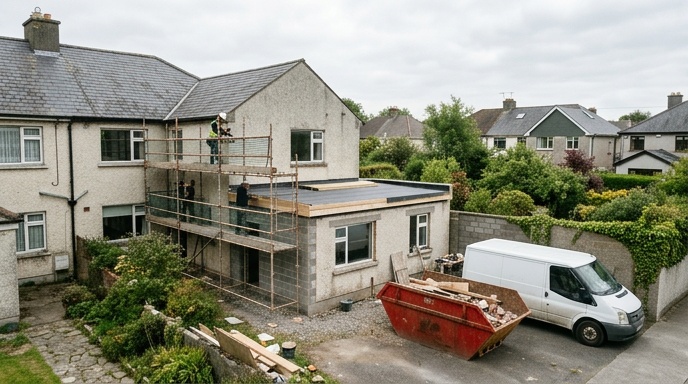
Felt roof replacement costs are driven by five things: roof size, the state of the timber deck, access and scaffolding, the felt system chosen, and labour. Get a handle on these and you’ll understand why two quotes for the same house can differ by hundreds of euro.
- Roof size is the biggest lever. More square metres means more material and more hours on the tools.
- Deck condition matters hugely. If the chipboard or ply under the felt has rotted from a long-term leak, it has to come out and be replaced before anything goes down.
- Access can quietly add cost. A roof you can reach off a ladder is faster than one needing a scaffold tower or cherry picker.
- System choice changes the material bill. Three-layer torch-on felt costs less than a premium high-performance membrane.
- Labour and disposal cover stripping the old roof, skip hire and the day rate of a skilled crew.
A reputable roofer will inspect the deck before quoting, because surprises mid-job are where budgets blow out. The right way to avoid that is a proper look under the old felt first, which is part of any honest inspection.
Does Removing the Old Roof Add to the Price?
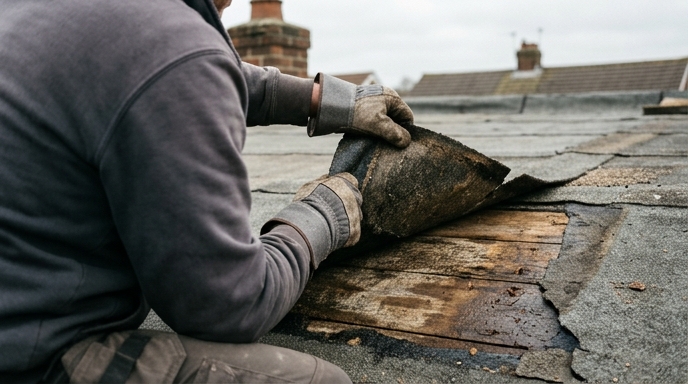
Yes, stripping and disposing of the old felt is built into most replacement quotes, and it typically adds a few hundred euro depending on how many layers are up there. Old roofs with two or three layers of felt take longer to remove and fill a bigger skip. If the roof was previously overlaid rather than stripped, expect a little more.
What If the Timber Deck Is Rotten?
A rotten deck is the most common hidden cost on a felt roof job, often adding €300 to €1,000 depending on how much board needs replacing. Water that has sat under failed felt soaks the chipboard or plywood below. You can’t lay new felt over soft timber, so the affected sections get cut out and re-boarded before the membrane goes on.
Which Felt Roofing System Should You Choose?
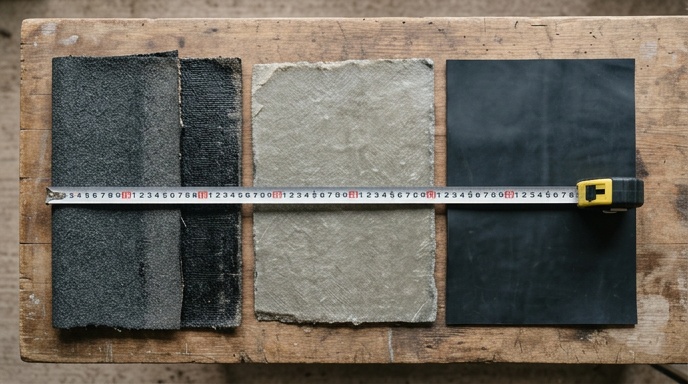
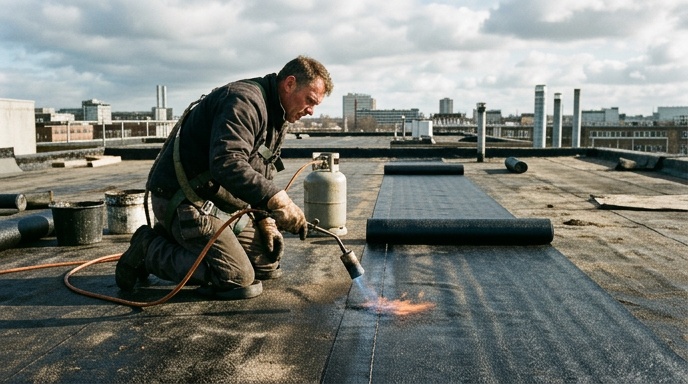
The right felt system depends on your budget and how long you want it to last, with torch-on felt being the common mid-range choice for Irish homes. Three-layer torch-on gives solid performance at a fair price, while higher-spec membranes cost more upfront but last longer and handle ponding water better.
Here is how the main flat roof options compare on cost and lifespan.
| System | Relative Cost | Typical Lifespan |
|---|---|---|
| Three-layer torch-on felt | Lower to mid | 15 to 20 years |
| Fibreglass (GRP) | Mid | 20 to 25 years |
| EPDM or single-ply | Mid to higher | 25 to 30 years |
Torch-on felt remains popular because it’s proven, repairable and easy to source. If you’re weighing felt against a longer-life alternative, it’s worth looking at the full range of flat roofing options before you commit, since the cheapest system now isn’t always the cheapest over twenty years.
Should You Repair or Replace a Felt Roof?
Repair a felt roof if the damage is localised and the deck underneath is dry, but replace it once the felt is cracked across the whole surface or water has got into the timber. A single split or a lifted seam is a cheap fix. Widespread blistering, ponding and multiple leaks mean the system has reached the end of its life.
Signs it’s time to replace rather than patch include:
- Cracks or splits spread across the whole roof, not just one spot.
- Standing water that never drains and leaves dark patches.
- Blisters or bubbles where the layers have separated from the deck.
- Sagging areas, which usually mean the timber below has gone soft.
- Repeated leaks after previous patch repairs.
A one-off leak around a flashing or upstand is often a straightforward repair job. The Irish climate is hard on flat roofs, and the wet and windy climate data from Met Éireann explains why water sitting on a tired felt surface finds its way in so quickly. When patching stops working, replacement is the honest answer.
How Can You Keep Felt Roof Replacement Costs Down?
You can keep felt roof replacement costs down by acting before the deck rots, getting more than one written quote, and choosing a system that suits the roof rather than overpaying for spec you don’t need. Catching a failing roof early is the single biggest saving, because fixing soft timber adds the most to a job.
- Book an inspection as soon as you spot pooling water or a damp patch inside.
- Get at least two itemised quotes so you can compare like for like.
- Check the roofer carries proper insurance, such as employer and public liability cover.
- Ask whether the deck will be inspected before the price is fixed.
- Match the system to the roof. A garage doesn’t need a premium membrane.
Working with a firm that supervises its own crew in-house also protects the quality, since the people pricing the job are the ones doing it. A free, honest inspection that tells you plainly whether you need a repair or a full replacement saves you spending on work you don’t need.
When you want a fixed price rather than an estimate, a proper written quote after an on-site look is the only reliable figure. For context on consumer rights around home improvement work and quotes, the consumer guidance from the CCPC is a useful read before you sign anything.
Is Felt Roof Replacement Worth It?
Felt roof replacement is worth it when a failing flat roof is letting water into your home, because the cost of repeated repairs and interior damage soon outweighs a proper new system. A fresh felt roof restores the waterproof layer, protects the structure, and buys you fifteen to twenty years before you think about it again.
The smart move is to get a professional look before anything else, so you know whether a repair will do or a full replacement is the sensible spend. Book a free roof inspection and get a clear, itemised price for your own roof.