
 Skip to content
 Water beside a chimney, in a valley, or where an extension meets a wall nearly always points to failed flashing. We find the failed section and fix it properly. New lead cut and fitted right, priced in writing before any work starts, and nothing added after you agree. No guesswork, no patching over.
50+
years
Fully insured
Guild of Master Craftsmen
4.9 ★
rating
Request A Quote
Get the contact details you need to connect with our team.




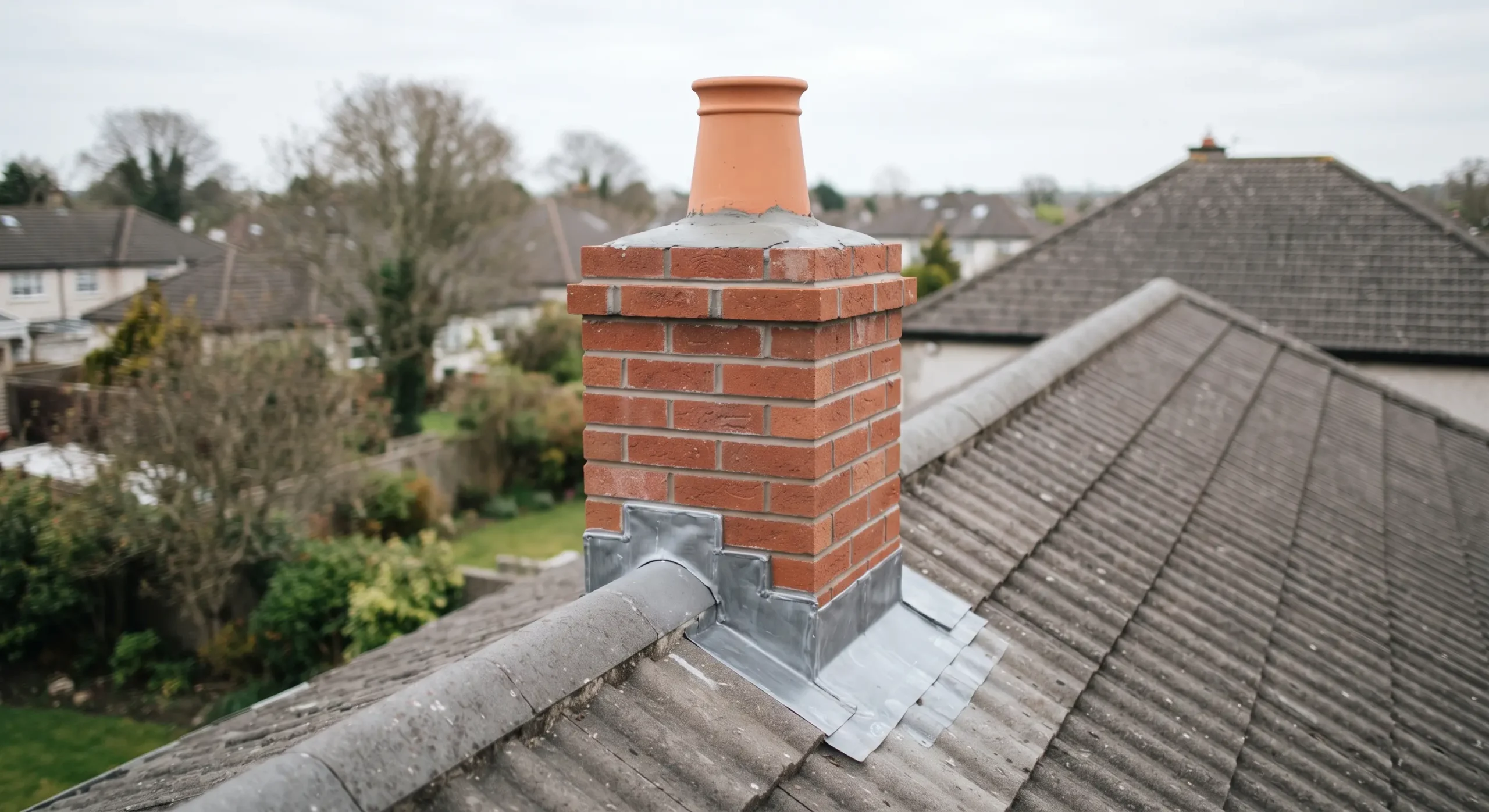
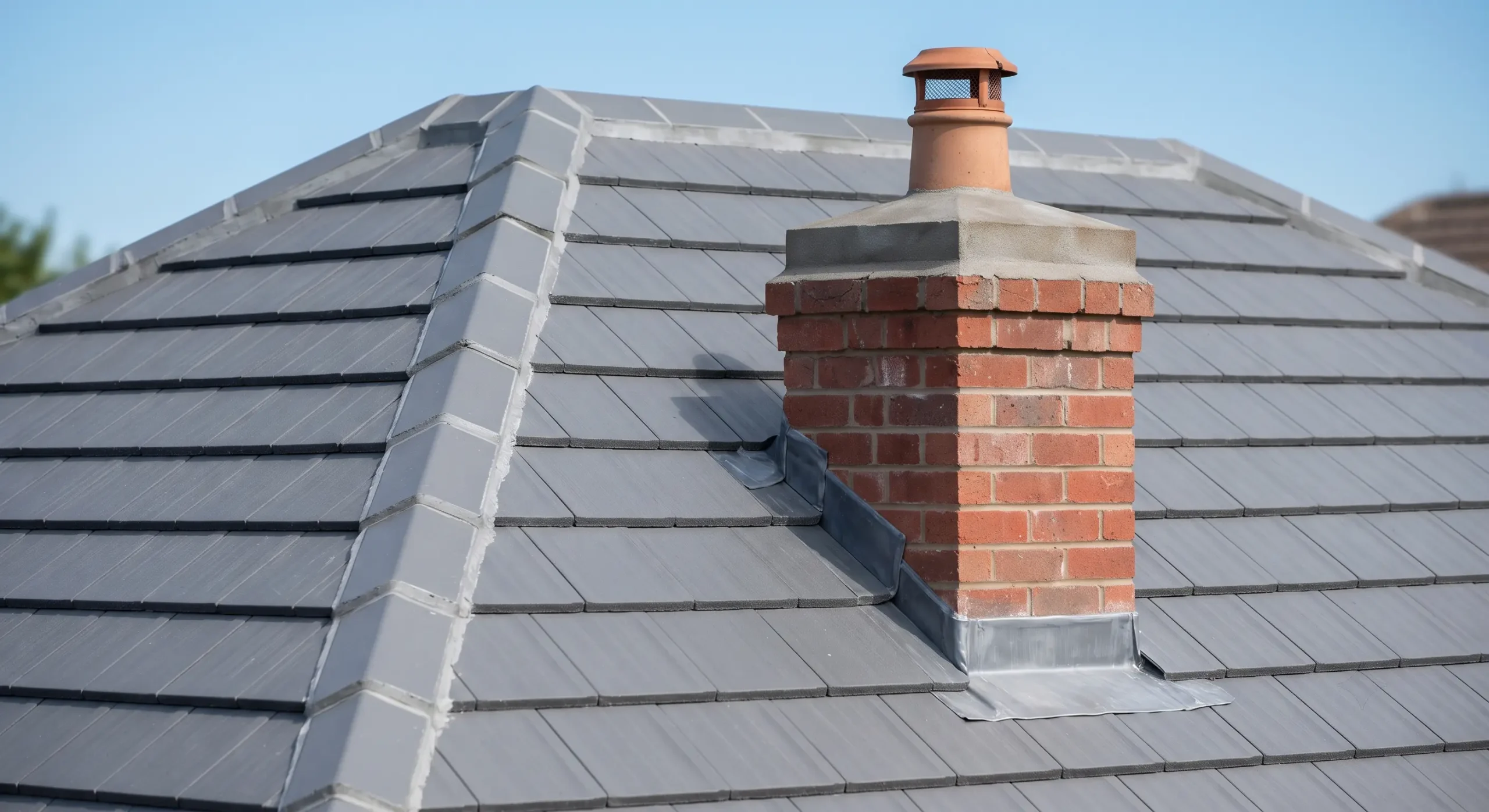
Lead flashing seals every join where tiles or slates meet a chimney, wall, valley, or skylight, and it causes a large share of roof leaks. It is also the fault most often misread as something bigger
Brown rings on the ceiling or chimney breast, worst after windy wet nights. Nine times out of ten the stack is fine and the lead has lifted or split.
Lead pulling away from the wall, wavy lines where it should sit flat, or cracks along the fold. White chalky powder means years left bare and unprotected.
Black or grey sealant smeared along a flashing line is a repair that has already failed once. Mastic goes brittle in a couple of Irish winters and shrinks away.
Nearly every job we do is in lead. It dresses tight to uneven surfaces and stays put through Irish weather. From chimneys to valleys, every flashing detail below gets cut and fitted by our own crew.
Lead code is the trade word for sheet thickness. We match it to the detail, never guess it. Lighter lead suits a chimney side. Heavier lead takes the run-off in a valley. Wrong code splits within a few years.

Most roof problems start small and quiet, then get expensive. If you have spotted any of these, it is worth getting them looked at before the next downpour.
We come out, get on the roof, and find exactly what is wrong.
You get a clear, itemised price. No call-out charge, no pressure.
Our own crew carries out the work, tidily and on the agreed date.
We show you what we did and stand over the work.

Flashing only fails in a handful of places, and after fifty years on Dublin roofs we know every one of them before we get up there.
Water slips in where the lead meets the brick, then shows up as a damp patch on the chimney breast.
Two roof slopes meet and send all their rain down one channel, so worn valley lead leaks fast.
Where a flat roof meets the house wall, the joint works loose over time and lets water track inside.
Lead around a roof window ages quicker than the window itself, and drips show on the frame inside.
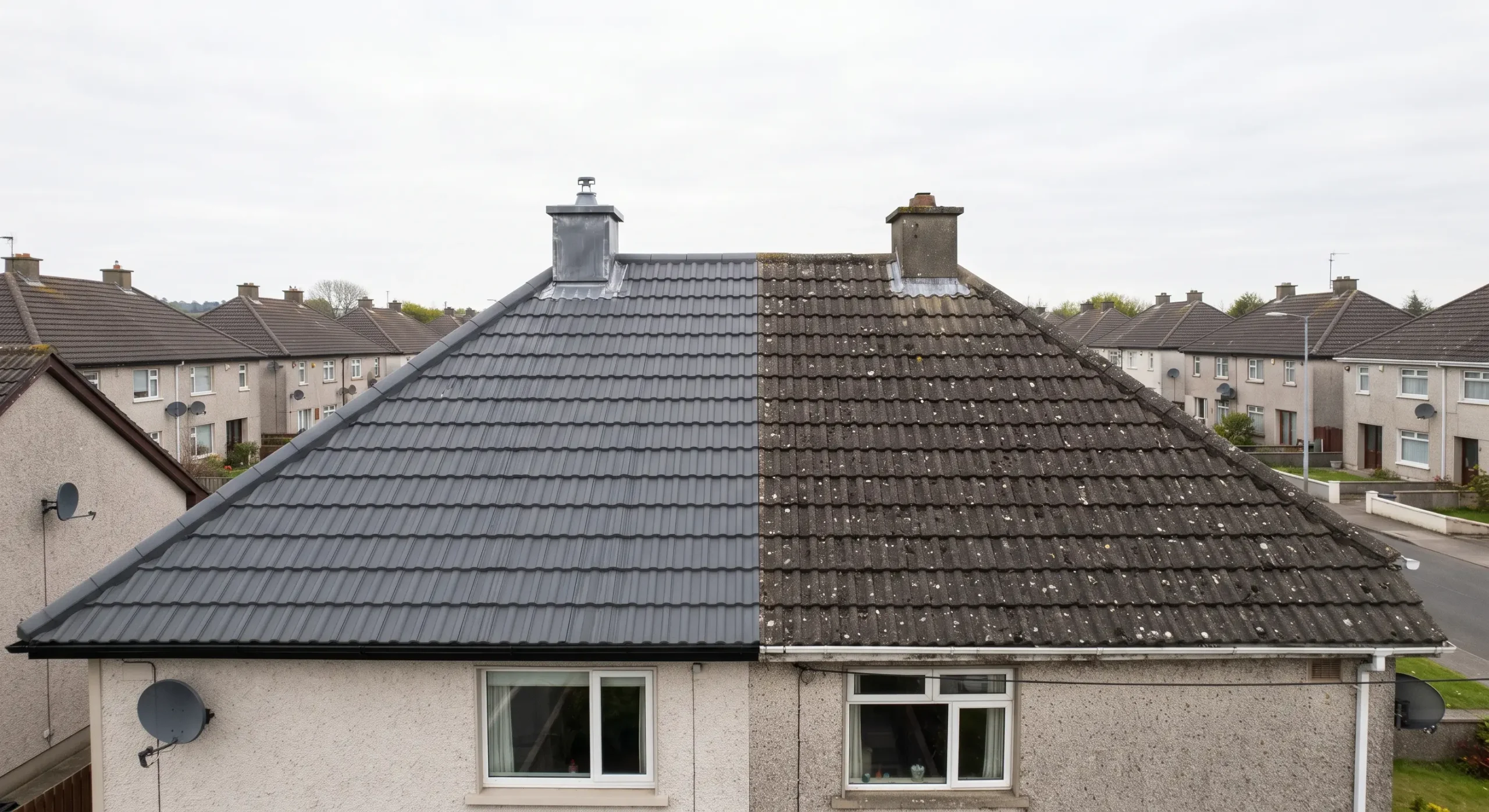
A few recent repairs around Dublin. Real jobs, real homes.
Two Irish sources published in 2026 put full chimney flashing replacement at roughly €400 to €900 in Dublin. That covers the apron, stepped sides, and back gutter with lead and labour.
Scaffold adds roughly €300 to €800. Those are market figures, not our quote. Your roof gets a written fixed price after the survey, and our Roof Cost Calculator gives a quick indication before you book.
Access. The biggest factor. Scaffold for a two-storey stack costs real money. A low abutment off a roof ladder does not.
How much lead. A metre of apron is a different job to a full chimney.
The code of lead. Heavier sheet costs more and takes longer to dress.
The mortar. Soft joints have to be raked and made good before the lead goes back.
What is underneath. Water sitting behind a failed flashing can rot the timber. We find that at survey, not halfway through.
Talk To a Consultant
01 453 3366
Posted on Google
 Amelia Taylor
Trustindex verifies that the original source of the review is Google.
Very pleased with the metal roof that HP Roofing just installed!Posted on GoogleSaeeda GhiasVery professional and timely servicePosted on GoogleIman JavaidExcellent work done by HP Roofing. Professional roofing service delivered on time.
No call-out charge, no obligation. We’ll tell you honestly whether it needs repairing or replacing.
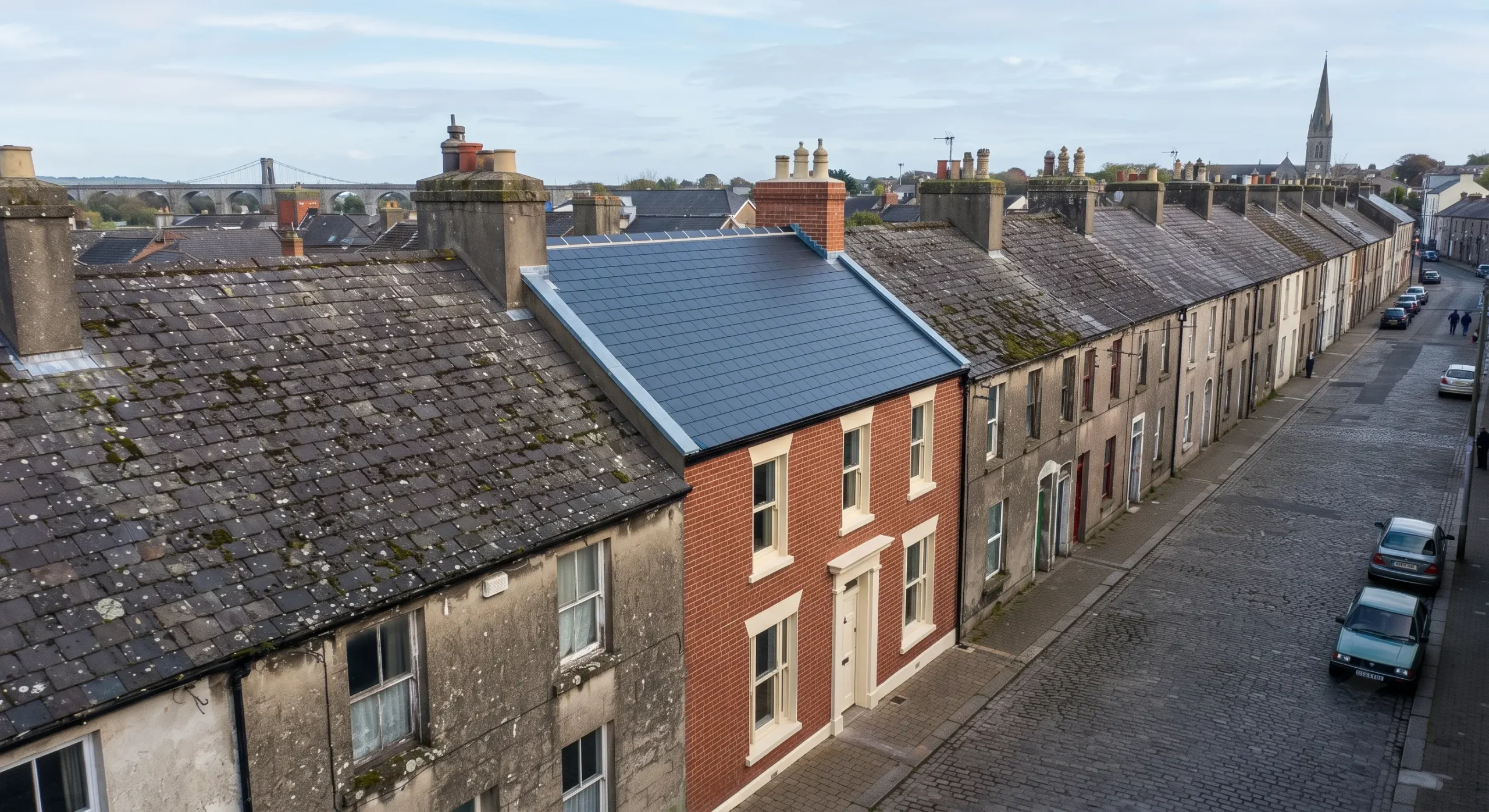
A flashing leak usually shows as a damp patch on the ceiling right beside the chimney breast, and it gets worse in wind-driven rain rather than steady drizzle. A failing stack tends to show damp on the stack itself and crumbling mortar you can see from the ground. The only way to be sure is to look at the junction close up, which is what the free survey is for.
It depends on the lead itself. If the lead is sound and only the mortar holding the top edge has failed, we rake out the joint and re-wedge and re-point it. If the lead is split, fatigued, too light for the detail or has been patched with sealant, replacing it is the honest answer, because a repair will fail again within a season or two.
Three causes account for most repeat failures. The lead was too light for the detail, so it fatigued and split. The sheet was cut too long in one piece, so it had nowhere to expand and it cracked along the fold. Or someone sealed over the problem with mastic instead of cutting the lead back into the mortar joint.
Often, yes. On a two-storey house with a stack near the ridge, safe access means scaffold or a tower, and that is a real part of the price. On a single-storey extension or a low abutment we can usually work off a roof ladder. We tell you which applies before you commit, so the quote does not change on the day.
Book a free, no-obligation inspection and we will tell you honestly what your roof needs.
Request A Quote
Get the contact details you need to connect with our team.


