Skip to content

If you are planning a new roof or a full re-roof, one layer does a lot of quiet work under your tiles. That layer is the breather membrane. It sits below the tiles or slates, lets water vapour escape from inside the roof, and keeps wind-driven rain out.
On modern roofs, this underlay has largely replaced the old black bitumen felt. It is lighter, it handles moisture better, and it lowers the risk of damp and condensation in the roof space.
This guide covers the main types, the brands you will see in Ireland, and how to tell when your roof actually needs one.
What Is a Breather Membrane?
A breather membrane is a thin, water-resistant sheet fitted under your roof tiles or slates as a second line of defence. It blocks rain and wind that slip past the outer covering, and at the same time it lets moisture vapour pass out of the roof. That keeps the timber and insulation dry.
The sheet sits over the rafters and under the tile battens, on the cold side of any insulation. It replaced the old bitumen felt (known in the trade as Type 1F) on most new pitched roofs.
In simple terms, it does three jobs:
- Stops wind-driven rain reaching the roof timbers
- Lets water vapour escape so it cannot build up as condensation
- Adds a backup layer if a tile ever slips or cracks
How It Keeps Your Roof Dry
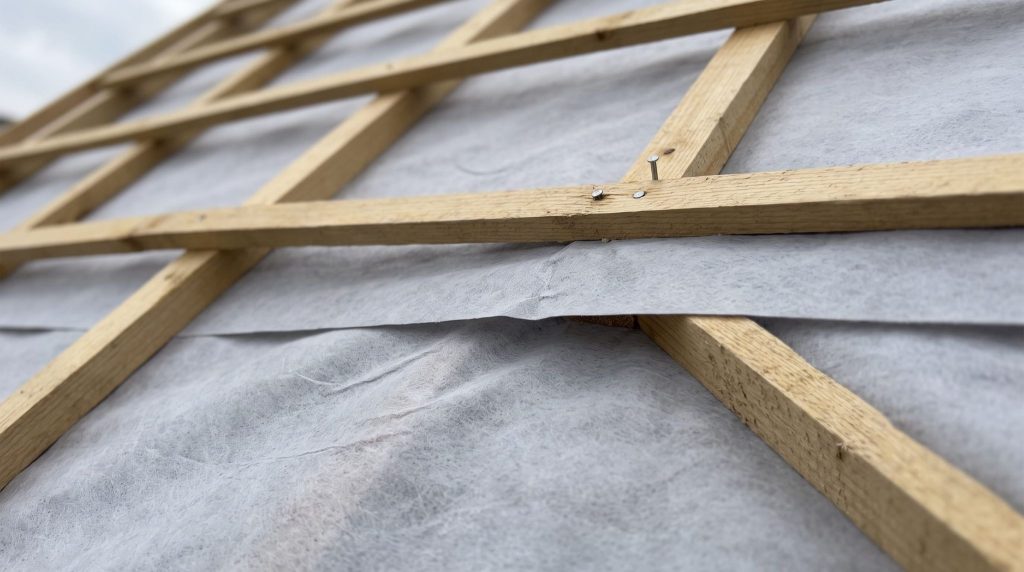
A breather membrane works like a good waterproof jacket. The outer face sheds rain and wind, while tiny pores let water vapour from inside the home pass through to the outside.
Any rain that gets past the tiles simply runs down the surface of the sheet and into the gutter. That is why correct laps and a clear drainage path matter so much during fitting.
Breathable Membrane vs Traditional Roofing Felt
The difference is simple. A breathable sheet lets water vapour escape through the material, while traditional bitumen felt does not. Old felt is water resistant but sealed, so any moisture that reaches the roof space has to be removed by ventilation alone.
You will sometimes see these products sold as breathable roofing felt or simply breathable felt. It is the same modern underlay, just under a friendlier name.
| Feature | Breathable membrane | Traditional bitumen felt |
| Keeps rain and wind out | Yes | Yes |
| Lets vapour escape | Yes | No |
| Roof space ventilation | Reduced in many cases | Always required |
| Weight and handling | Light, easy to lay | Heavier, can sag over time |
| Used on new roofs today | Standard choice | Rarely specified |
Stripping an old roof and re-laying the covering is the natural point to swap tired felt for a modern breathable underlay. It is one detail worth checking early, alongside the other things to know before you replace your roof.
Do Breathable Membrane Need Roof Ventilation?
Not on its own, in most cases. A breathable membrane lowers the moisture load, but it does not remove the need for roof ventilation.
In practice, a roofer often adds counter-battens to create a ventilated gap, plus vents low at the eaves and high at the ridge for cross-flow. A few air-open membranes are tested for unventilated roofs, but only when fitted exactly to the maker’s instructions.
Ventilation and the control of condensation in roofs fall under Ireland’s building regulations on ventilation, and a good roofer will follow that guidance and the manufacturer’s spec together.
Popular Membrane Brands in Ireland

A handful of trusted names cover most Irish roofs. DuPont Tyvek, Klober, Cromar and the A. Proctor Group all make breathable underlays sold through Irish and UK merchants.
- DuPont Tyvek Supro is a widely used vapour permeable underlay, strong and light, common on both new roofs and re-roofs
- Klober Permo offers a well-known range with options for different exposure levels and wind zones
- Cromar Vent 3 is a good-value triple-layer membrane suited to cold and warm roof builds
- A. Proctor Roofshield is an air-open membrane often chosen because it can avoid the need for separate roof vents when fitted correctly
Whatever the brand, look for third-party certification. In Ireland that means an NSAI Agrément certificate or a British Board of Agrément (BBA) certificate, which confirms the product suits Irish conditions and the building regulations.
When Do You Need Breathable Membrane?
You need a breather membrane whenever you fit a new pitched roof or strip and re-lay an existing one. It is now the standard underlay for tiled and slated roofs. For a small repair you may not touch it at all, but any full roof should include a proper breathable layer.
New Roofs and Full Re-Roofs
On a brand-new roof or a full re-roof, the underlay goes on as a matter of course. The work strips back to the rafters, then the membrane, battens and outer covering go on in sequence.
If you are planning a new roof for your home, check that the quote lists a certified breathable underlay rather than old bitumen felt.
Roof Repairs and Small Patches
For a small leak or a few slipped tiles, the existing underlay usually stays in place, and the repair focuses on the covering above it. If the felt below is torn or crumbling, that is a sign the roof is nearing the end of its life. At that point a wider re-roof often makes more sense than repeated patches.