Skip to content
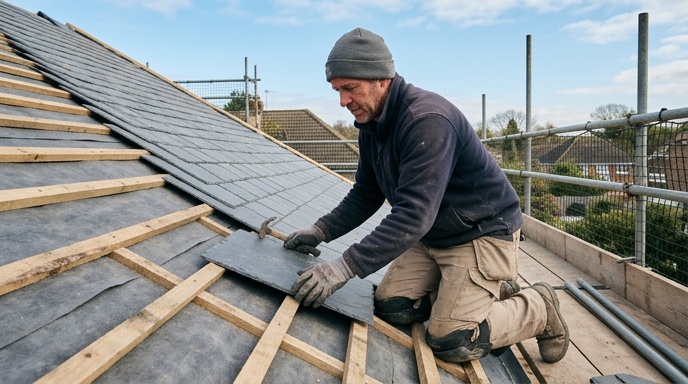
A new roof cost in Ireland typically lands between €9,000 and €16,000 for most Dublin homes, though the final figure depends on roof size, pitch, and the material you choose. Smaller terraced roofs can come in lower, while large detached properties or heritage slate work push higher.
That range covers stripping the old roof, new felt and battens, the covering itself, labour, and clean-up. It is a useful starting point, not a fixed quote, because every roof is different once you get up and look at it.
Below we break down what you actually pay for, how material choice changes the number, and where costs sneak up so you can budget with your eyes open before you call anyone out.
What Does a New Roof Cost in Ireland in 2026?
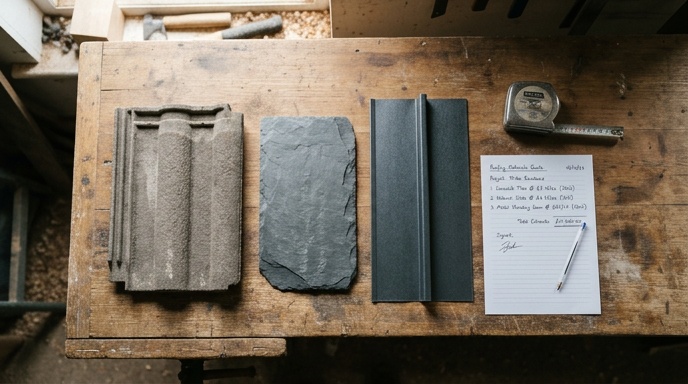
Most Dublin re-roofs land between €9,000 and €16,000 fitted, with the mid-market sitting around €11,000 to €13,000 for a standard semi-detached home. Pitched concrete tile roofs are the cheapest route, natural slate and metal sit higher, and copper or zinc are specialist jobs at the top end.
The table below gives rough fitted ranges by roof type. Treat them as planning figures that shift with your home.
| Roof Type | Typical Fitted Range | Notes |
|---|---|---|
| Concrete tile re-roof | €9,000 to €13,000 | Most common and most affordable |
| Natural slate | €13,000 to €20,000+ | Longest life, higher material cost |
| Metal or standing seam | €12,000 to €22,000 | Light, durable, good on low pitches |
| Flat roof (per garage or extension) | €2,500 to €6,000 | Depends on system and size |
Use our roof cost calculator to get an estimate figure for your own roof in about a minute.
What Factors Affect the Price of a New Roof?
Roof size, pitch, material, and access are the four things that move a new roof price the most. A bigger roof means more material and labour, a steep pitch needs more scaffolding and care, premium coverings cost more per square metre, and awkward access slows the whole job down.
Here are the main drivers that change your quote:
- Roof size and shape. More square metres and more valleys, hips, or dormers all add labour.
- Material choice. Concrete tile is the budget option, natural slate and copper the premium end.
- Pitch and height. Steeper and taller roofs need more scaffolding and safety work.
- Access. A tight terrace or a house on a busy road is slower to work on.
- Condition of the timbers. Rotten rafters or battens found on strip-off add cost.
A proper quote only comes after someone climbs up and checks the structure, which is why a new roof installation is always priced per home rather than off a flat rate.
How Much Does Scaffolding Add?
Scaffolding usually adds €800 to €2,500 depending on the height, the number of elevations, and how long it stays up. A two-storey detached home with a steep pitch needs far more than a single-storey extension. On busy streets you may also need a road or footpath licence from the council, which carries its own fee.
Does Removing the Old Roof Cost Extra?
Yes, stripping and disposing of the old covering is part of a full re-roof and is factored into the fitted price. The cost rises if the old material is heavy slate, if there are multiple layers, or if asbestos is present, which must be removed by a licensed contractor and tipped legally.
How Does Material Choice Change the Cost?
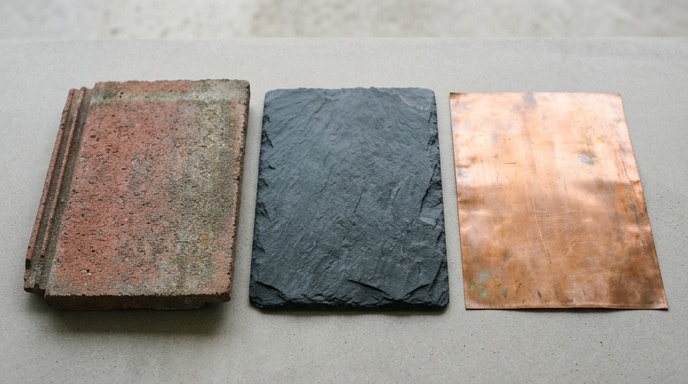
Material is the single biggest lever on a new roof price, often swinging the total by €5,000 or more on the same house. Concrete tile is the most affordable and the most common on Irish homes. Natural slate costs more upfront but lasts generations, and metals like copper and zinc sit at the specialist end.
A quick guide to how the common options stack up:
- Concrete tile. Lowest cost, 40 to 60 year life, widely stocked.
- Natural slate. Higher cost, 80 to 100+ year life, the classic Irish look.
- Metal and standing seam. Light and long-lasting, good on modern and low-pitch roofs.
- Copper and zinc. Premium, decades of life, often used on feature roofs and heritage work.
If you are weighing one covering against another, our natural slate roofing options show where the extra spend buys you decades of extra life. Material choice is a long-term call, so think in terms of cost per year on the roof, not just the sticker price today.
Should You Repair or Replace Your Roof?
Repair when the problem is local and the roof is otherwise sound, replace when failures are spreading or the roof is near the end of its life. A single slipped slate or a leaking flashing is a repair. Widespread slipped slates, sagging, damp in several rooms, or a covering past its lifespan point to a full re-roof.
Signs that usually tip a roof toward replacement:
- Leaks appearing in more than one place after rain.
- Multiple slipped, cracked, or missing slates or tiles.
- A visible dip or sag in the roofline.
- Daylight showing through the roof in the attic.
- A covering already past its expected service life.
A free, honest inspection is the only way to know for sure, and a good roofer will tell you straight whether a roof repair will hold or whether you are throwing good money after bad. Since 1969 the straight answer has mattered more here than the bigger invoice.
How Can You Keep New Roof Costs Down?
You keep costs down by getting the timing right, comparing like-for-like quotes, and not over-specifying materials your home does not need. Rushing an emergency replacement in storm season costs more than a planned job, and the cheapest quote often leaves out scaffolding or waste disposal.
Practical ways to control the spend:
- Get the roof inspected early so you plan rather than react.
- Ask for itemised written quotes so you compare the same scope.
- Check that scaffolding, strip-off, and waste are all included.
- Match the material to the house, not the glossiest brochure.
- Use a roof cost calculator to set a realistic budget before you book quotes.
It is also worth checking what counts as home improvement for insurance and tax purposes. Ireland’s guidance on home renovation reliefs is worth a read before any major works, and the rules on altering a home cover when planning permission or notice might apply.
What Does a Good Roofing Quote Include?
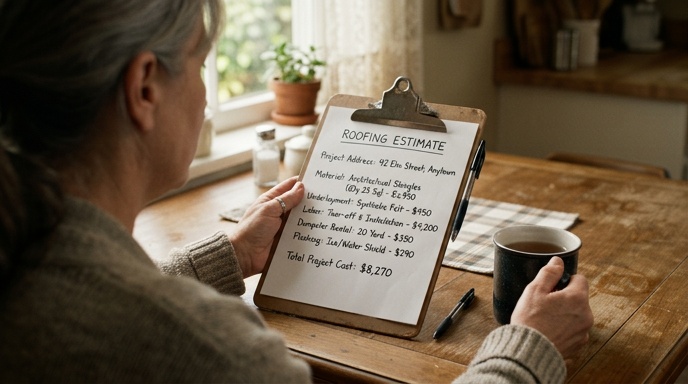
A good quote is written, itemised, and clear about exactly what is and is not covered. It should name the materials, the scope of work, scaffolding, waste removal, and any warranty, with a fixed price rather than a vague ballpark. If a quote is a single number on the back of a card, be wary.
Before you sign anything, check the quote covers:
- The specific material, make, and colour of the covering.
- Strip-off and disposal of the old roof.
- Scaffolding and any road or footpath licence.
- New felt, battens, and any timber repairs.
- A written workmanship warranty and proof of insurance.
It also pays to check the roofer is properly insured and works to a recognised standard. Full employer and public liability cover, CSCS-carded crews, and membership of the Guild of Master Craftsmen are the marks of a firm that stands over its work rather than disappearing once the cheque clears.
Budgeting for Your Roof
Plan for a new roof cost in Ireland somewhere in the €9,000 to €16,000 range for a typical Dublin home, then adjust for your material, size, and access. The surest way to a real figure is a free inspection where someone actually gets up and looks at the structure under the covering.
Get in touch with our team if you are ready for a straight, no-pressure number for your own roof.