Skip to content
Roof leaks in heavy rain almost always come down to a weak point the water has found under pressure. Slipped slates, cracked flashing, blocked gutters or a tired flat roof let driving rain get past the surface and into the timber below. The leak only shows up when the weather is bad enough to overwhelm that weak spot.
The short version is this. Stop the water getting in, protect what’s below, and get the real fault fixed before the next storm. A small leak in October becomes a rotted rafter by spring if it’s left.
Here’s why roofs leak in heavy rain, what you can safely do while it’s happening, and when it’s time to get a roofer up there.
Why Does a Roof Leak Only in Heavy Rain?
A roof leaks only in heavy rain because light rain runs off cleanly, while heavy, wind-driven rain forces water sideways and upward into gaps that normally stay dry. The volume overwhelms gutters and valleys, and the wind pushes water under slates and flashing that would shed a soft shower with no trouble.
Common culprits behind a heavy-rain leak include:
- Slipped or cracked slates that expose the felt and timber underneath.
- Failed lead flashing around chimneys, valleys and roof junctions.
- Blocked gutters and downpipes that back water up under the roof edge.
- A split or ponding flat roof that can’t drain fast enough.
- Worn or torn roofing felt that no longer sheds water.
Wind direction matters too. A leak that only appears in a south-westerly gale usually means wind-driven rain is hitting one exposed elevation and finding a fault the rest of the year never tests.
What Are the Most Common Causes of Roof Leaks in Dublin?
The most common causes of roof leaks on Dublin homes are slipped slates, failed flashing, blocked gutters and ageing flat roofs. Older slate and tile roofs loosen over decades of Irish weather, and the junctions where the roof meets a chimney or wall are nearly always the first to fail.
1. Slipped or Broken Slates and Tiles
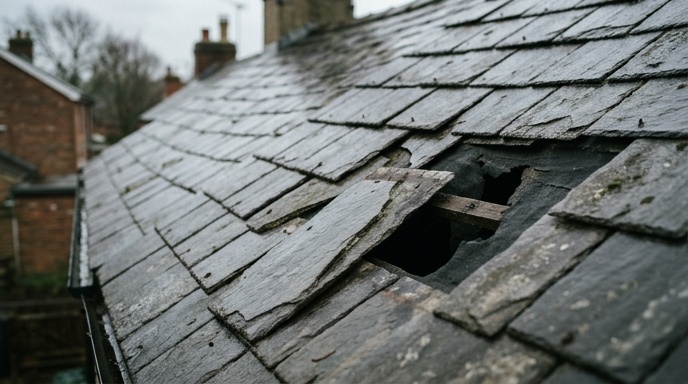
Slipped slates are the single most frequent cause of a leak in heavy rain. The nails holding a slate rust and let go, the slate drops, and a gap opens to the felt below. One missing slate on an exposed pitch is enough to let a steady drip through in a storm.
2. Failed Flashing Around Chimneys and Valleys
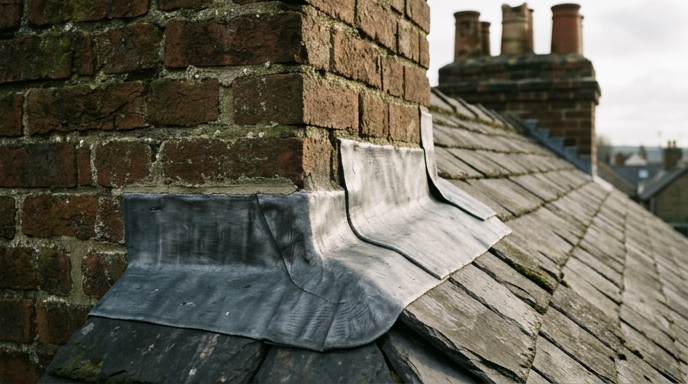
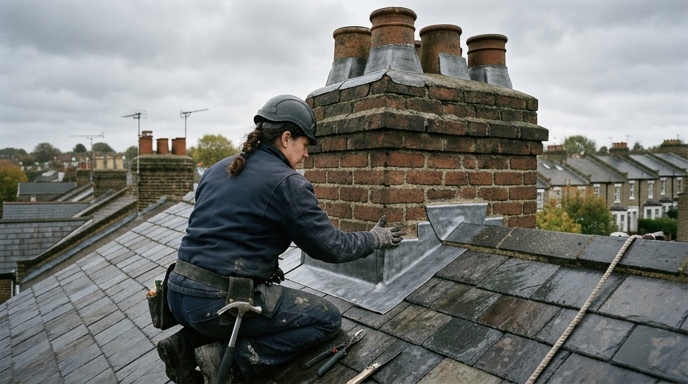
Flashing is the lead or metal that seals the joins where the roof meets a chimney, wall or valley. When it cracks, lifts or pulls away from the mortar, rain runs straight behind it. Chimney flashing and valleys carry a lot of water in a downpour, so a small gap leaks fast.
3. Blocked Gutters and Downpipes
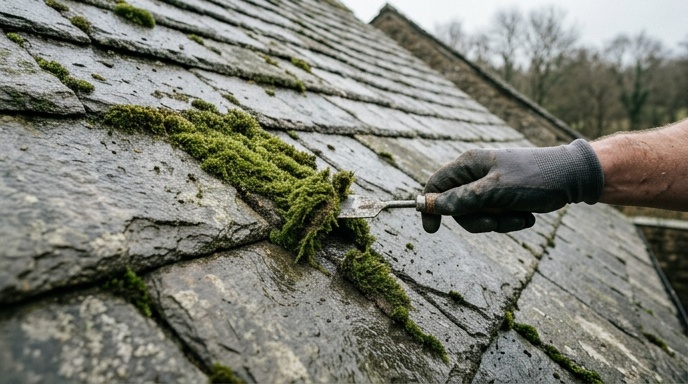
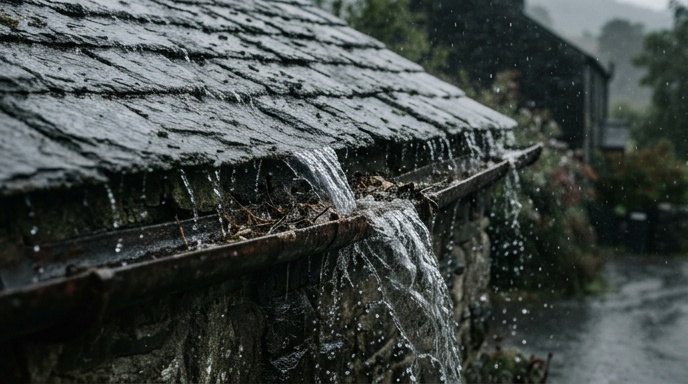
Blocked gutters are an easy one to miss. Leaves and moss fill the channel, water overflows at the roof edge, and it soaks back into the fascia, soffit and wall head. In heavy rain a clogged downpipe can push water up under the lowest course of slates.
4. Worn Flat Roofs and Old Felt
Flat roofs leak when the covering splits, blisters or ponds with standing water. Old torch-on felt and tired asphalt get brittle over time, and the first real storm after a cold snap often finds the crack. A flat roof over a kitchen or extension is a classic weak point.

What Should You Do When Your Roof Leaks During a Storm?
When your roof leaks during a storm, your first job is to protect what’s inside, not to fix the roof. Getting on a wet, windy roof is dangerous and best left until the weather passes. Contain the water, move your belongings, and arrange a proper inspection once it’s safe.
Work through these steps in order:
- Place a bucket or basin under the drip and lift anything valuable out of the way.
- If water is pooling in a ceiling and bulging the plaster, pierce a small hole with a screwdriver to let it drain into a bucket. A controlled drip beats a collapsed ceiling.
- Move furniture, electrics and flooring clear of the wet area.
- Turn off power to any light fitting or socket near the leak at the fuse board.
- Photograph the damage for your insurer before you clean up.
- Call a roofer to make it safe and find the source once the storm eases.
Stay off the roof and off ladders in high wind. A temporary internal catch is far safer than a fall. If the leak is heavy or spreading fast, emergency roof repairs can get a crew out to make the roof safe and stop the water at source.
How Do You Find Where a Roof Leak Is Coming From?
Finding a roof leak is tricky because water rarely drips directly below the fault. It runs along rafters, felt and battens before it shows on the ceiling, so the damp patch inside can sit a metre or more from where the rain actually gets in.
A roofer traces a leak by working from the inside out:
- Check the attic during or just after rain for the wet trail along the timbers.
- Follow the water uphill to the highest damp point, which is usually nearest the entry.
- Inspect the matching spot outside for a slipped slate, cracked flashing or open valley.
- Look hard at every junction, as chimneys, skylights and wall abutments cause most leaks.
This is why a proper inspection beats guessing. Trading since 1969, our crews have traced enough awkward leaks to know the damp patch on your ceiling is only ever the start of the story, not the location of the fault.
Should You Repair or Replace a Leaking Roof?
Repair a leaking roof when the fault is local, like a few slipped slates or a single length of failed flashing. Replace or re-roof when leaks keep returning in different spots, the felt underneath has perished, or the roof is simply past its working life. A good roofer gives you an honest verdict either way.
Use this as a rough guide:
| Situation | Likely Action |
|---|---|
| One or two slipped or cracked slates | Local repair |
| Cracked or lifted flashing at a chimney or valley | Flashing repair |
| Leaks appearing in several different places | Inspection, likely re-roof |
| Perished felt visible from the attic | Re-roof |
| Flat roof ponding and splitting across the surface | Flat roof replacement |
Patching a roof that’s near the end of its life is false economy, as the next weak point fails soon after. A free, honest inspection should tell you plainly whether a roof repair will hold or whether a full re-roof is the sensible call. Most Dublin re-roofs land between €9,000 and €16,000, though the real figure depends on roof size, pitch and material.
How Do You Stop a Roof Leaking in Future Heavy Rain?
The best way to stop future leaks is regular maintenance before the storms arrive, not emergency fixes after. A roof that’s inspected and cleared each year rarely springs a leak in heavy rain, because the weak points get caught while they’re still minor.
Build these into your routine:
- Clear gutters and downpipes at least twice a year, more if you have trees nearby.
- Have slipped or cracked slates replaced as soon as you spot them.
- Check flashing around chimneys, skylights and valleys for cracks and gaps.
- Book a roof inspection every few years and after any major storm.
- Keep an eye on flat roofs for pooling water and splits in the covering.
Irish winters bring plenty of wind-driven rain, so a roof that copes with a soft shower can still fail in a proper gale. For more on this, Met Éireann’s official weather warning service is worth watching so you can prepare before a named storm lands. A little upkeep is far cheaper than a soaked ceiling and a scramble for help mid-storm.
If your roof is already leaking or you want it checked before the next downpour, book a free roof inspection and we’ll give you an honest repair-or-replace verdict with no call-out charge.