Skip to content
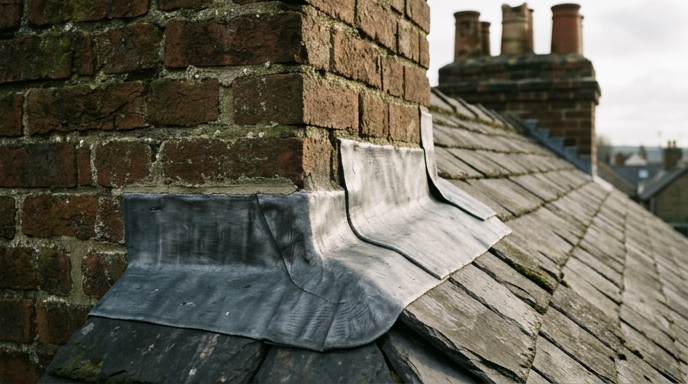
Lead flashing is the folded metal that seals the joins on your roof, keeping water out where the roof meets a chimney, wall, valley or skylight. Most lead flashing repairs in Dublin fall somewhere between €150 and €600, while a full chimney re-flash can run higher depending on access and scale.
It sits in the gaps that tiles and slates can’t cover on their own, and when it fails, water finds its way straight into the house. If you’re seeing damp patches near a chimney or a wall abutment, worn flashing is one of the first things a roofer will check.
Here we’ll walk through what lead flashing does, what it costs to replace, and the clear signs yours has reached the end of its life.
What Is Lead Flashing on a Roof?
Lead flashing is a weatherproofing detail made from rolled sheet lead, shaped and dressed to seal the vulnerable joins on a roof. It bridges the gap wherever the roof surface meets something it can’t tile over, so rainwater runs off instead of soaking in.
You’ll find it in the spots where roofs are most likely to leak:
- Where a roof meets a chimney stack, wrapped around the base as step flashing
- Along wall abutments, where a lower roof joins a higher wall
- In valleys, where two roof slopes meet and channel a lot of water
- Around skylights, roof windows and soil vent pipes
Lead has been the go-to material for centuries because it’s soft enough to dress tightly over awkward shapes yet tough enough to last decades. On heritage and conservation work it’s often the only material a planner will accept, which is why we still use it on landmark buildings across the city.
How Much Does Lead Flashing Replacement Cost in Dublin?
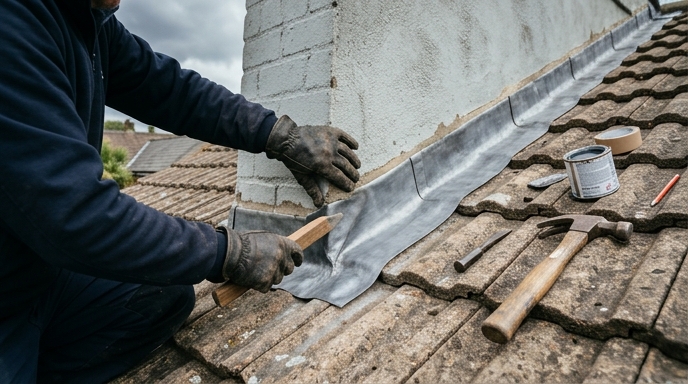
Replacing lead flashing in Dublin typically costs between €150 and €600 for a straightforward repair, with a full chimney re-flash sitting at the higher end and larger jobs going beyond that. The final figure depends on how much lead is involved, how hard the area is to reach, and whether scaffolding is needed.
Here’s a rough guide to what moves the price:
| Job type | Typical Dublin range |
|---|---|
| Single small flashing repair or re-dress | €150 to €300 |
| Chimney step and back flashing replacement | €350 to €600 |
| Valley lead replacement | €400 to €800+ |
| Full re-flash on a large or high roof | Priced after inspection |
Treat these as estimates, not a fixed quote. Access is the big variable. A single-storey extension flashing is quick, but a chimney on a three-storey terrace needs scaffolding and safe access, which adds cost before a bit of lead is touched.
The best way to get a real figure is a free inspection or a quick run through our roof cost calculator for a ballpark in about a minute.

When Should You Replace Lead Flashing?
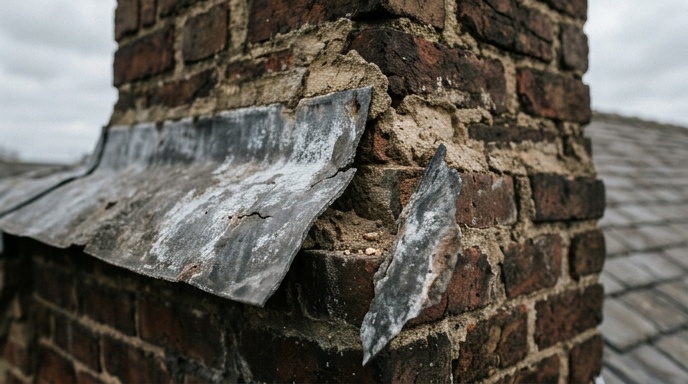
Replace lead flashing when it’s cracked, lifting, corroded, or pulling away from the surface it seals, because at that point it’s no longer keeping water out. Well-installed lead can last 40 years or more, so replacement is usually driven by damage, poor original fitting, or a job that was skimped on.
Watch for these 5 warning signs:
- Damp patches or staining on ceilings and walls near a chimney or roof join
- Visible cracks, splits or holes in the lead itself
- Flashing that has lifted, slipped, or come away from the mortar joint
- A white, powdery bloom on the surface, which is lead corrosion
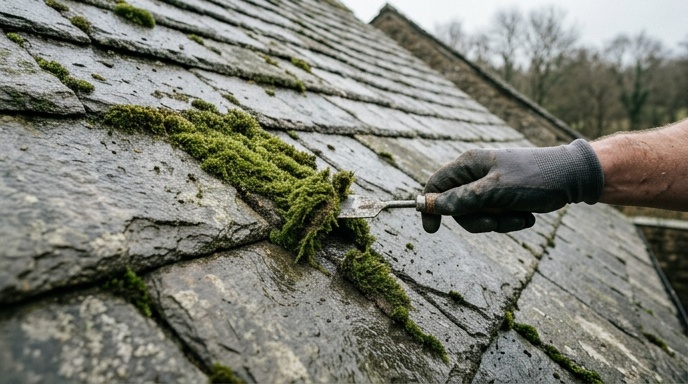
- Debris or moss building up where the flashing has failed to shed water
Not every issue means a full replacement. A lead detail that has simply come loose can often be re-dressed and re-pointed, which is why an honest repair-or-replace verdict matters before you spend a euro.
Repair or Replace Lead Flashing?
Repair if the lead is sound but has slipped or lost its pointing, and replace if the lead itself is cracked, thinned or corroded through. Re-dressing and re-pointing loose flashing is a fraction of the cost of a full replacement and buys years where the lead is otherwise in good shape.
Replacement makes more sense when the flashing was under-gauged in the first place, or when it’s failing across several points at once. Patching failing lead repeatedly costs more over time than doing it properly once.
What Causes Lead Flashing to Fail?
Lead flashing usually fails from poor original installation, thermal movement, or age. Lead expands and contracts with heat, and if it was fitted in oversized single lengths without expansion joints, it fatigues and cracks over the years.
Other common culprits include mortar joints crumbling and releasing the flashing, storm damage lifting it, and cheap thin-gauge lead that never had the substance to last. Getting the gauge and detailing right at the outset is what separates a 40-year job from a 5-year one.
Why Lead Flashing Matters for Your Whole Roof
Lead flashing protects the parts of your roof most likely to leak, so failing flashing puts the whole structure at risk, not just the join itself. Water that gets past the lead soaks into timbers, insulation and plaster, and the damage spreads well beyond the entry point before you ever see a stain.
Left long enough, a small flashing fault turns into rotten roof timbers, damaged ceilings and mould. That’s why flashing checks are part of any proper roof repair inspection we carry out, alongside slates, gutters and pointing.
A few habits keep flashing doing its job for longer:
- Have joins and abutments checked after any major storm
- Clear moss and debris that traps water against the lead
- Re-point mortar joints before they crumble and release the flashing
- Address a small leak early rather than waiting for a ceiling to go
For anyone weighing up wider roof work, the Heritage Council’s guidance on traditional building conservation is a useful reference on why lead is still specified on older and protected properties across Ireland.
Getting Lead Flashing Done Right
Good lead flashing comes down to the right gauge of lead, proper dressing, and clean mortar work, all fitted by someone who has done it hundreds of times. It’s a craftsman’s detail, and a rushed job shows within a year or two.
If you’ve spotted a stain near a chimney or a suspect join, don’t wait for it to spread through the ceiling below. Book a free, no-obligation roof inspection and we’ll give you an honest verdict on whether that flashing needs a re-dress or a full replacement.