Skip to content
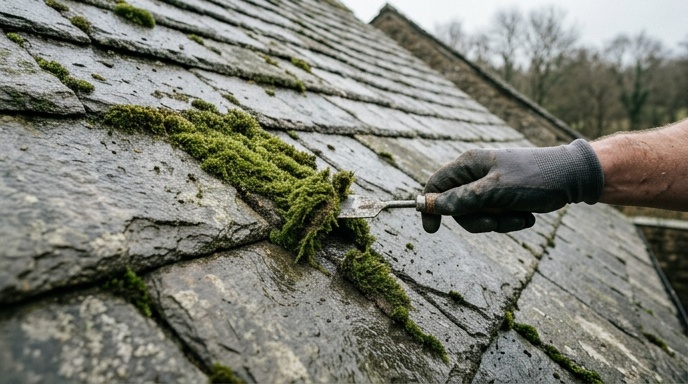
Moss removal and roof cleaning cost in Ireland ususaly sits between €300 and €1,200 for a standard home, depending on roof size, pitch, how much moss has built up, and whether you add a treatment afterwards. A small terrace with light growth sits at the low end. A large detached house with heavy moss and steep pitches pushes towards the top.
That range covers the physical clean. Extra work like re-bedding ridge tiles, replacing broken slates, or clearing blocked gutters is priced on top once someone actually looks at the roof. Prices always depend on access, safety setup, and the state of the roof, so treat any figure here as a guide, not a quote.
Damp Irish winters mean moss loves our roofs, and it comes back. Below we break down what you’ll pay, what moves the price, and whether a clean is worth it before you spend a cent.
What Does Moss Removal and Roof Cleaning Cost in Ireland?
Roof cleaning and moss removal in Ireland typically costs €300 to €1,200, with most standard three-bed homes landing somewhere around €400 to €700 for a straightforward manual clean. Bigger roofs, difficult access, and added treatments raise the figure. The numbers below are typical market ranges, not fixed prices.
| Job type | Typical price range |
|---|---|
| Small roof, light moss (terrace or semi) | €300 to €450 |
| Standard three-bed, moderate moss | €400 to €700 |
| Large detached, heavy moss | €700 to €1,200 |
| Moss treatment / biocide add-on | €150 to €400 |
| Gutter clearing (often bundled) | €80 to €200 |
These are guide figures. The only way to know your own price is to have someone assess the roof in person, which is why a free inspection beats any online estimate for accuracy.
What Affects the Price of Roof Cleaning in Ireland?
The price of roof cleaning is driven mainly by roof size, pitch, the amount of moss, and access.
- Roof size and pitch. More square metres and a steeper angle mean more time and more scaffolding or harness work.
- Amount of moss. Light green film scrapes off fast. Thick, matted moss packed into slate joints is a slow job.
- Access. Tight side passages, conservatories below, or three-storey heights push labour and safety costs up.
- Roof material. Fragile natural slate needs a gentler hand than concrete tile, so it takes longer.
- Cleaning method. Manual scraping and soft washing cost differently to high-pressure washing.
Because so much hinges on the state of the roof, honest firms won’t give a firm price over the phone. A quick look tells them whether it’s a half-day scrape or a full setup with edge protection.
How Is Moss Removed From a Roof?
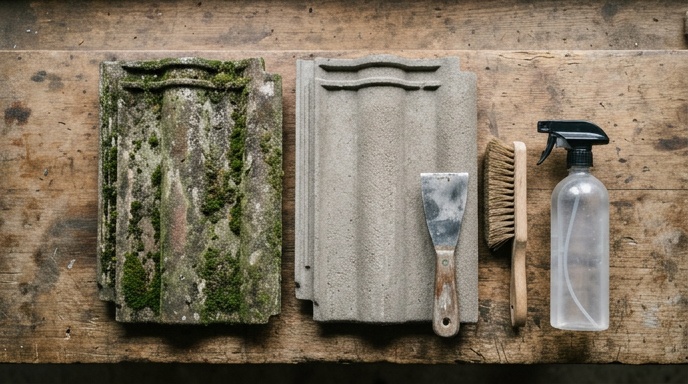
Moss is removed from a roof mainly by manual scraping, soft washing, or low-pressure cleaning, usually finished with a biocide treatment that keeps regrowth down for a couple of years. The right method depends on your roof material, because the wrong one can do real damage.
Manual Scraping and Brushing
Manual scraping is the gentlest method and the safest for natural slate. A roofer works down the roof by hand, lifting moss off the tiles and out of the joints, then brushing the surface clean. It’s slower, but it protects the tiles and the waterproofing underneath.
Soft Washing and Biocide Treatment
Soft washing uses low-pressure water with a treatment solution to kill moss, algae, and lichen at the root. After the roof is cleared, a biocide treatment is applied to slow regrowth. This is the part that buys you time before the moss creeps back, which in the Irish climate it always does.
Why Pressure Washing Can Be Risky
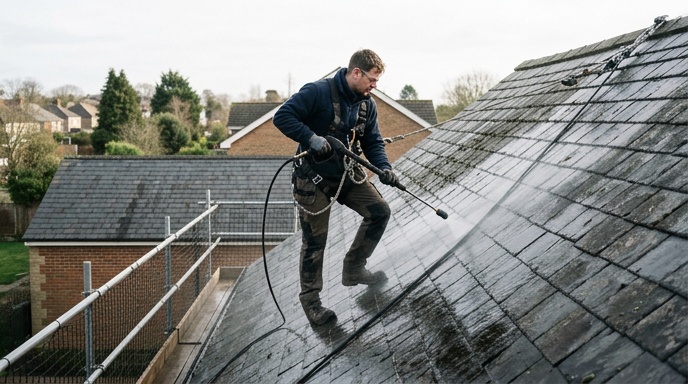
High-pressure washing looks impressive but can strip the protective granules off concrete tiles, crack older slate, and force water under the tiles. On an ageing roof it can turn a cleaning job into a repair job. Many experienced roofers avoid it on anything but robust, modern tile.
Is Roof Cleaning Worth the Money?
Roof cleaning is worth it when moss is holding moisture against the tiles, blocking gutters, or lifting slates, but it’s rarely worth it for looks alone on a roof near the end of its life. A clean can extend a healthy roof’s life. It won’t save one that’s already failing.
Here’s a straight way to think about it before spending.
- Worth it if the roof is sound and moss is causing damp, gutter blockages, or slipping tiles.
- Worth it before selling, where kerb appeal genuinely matters.
- Think twice if the roof is 30 or 40 years old and near replacement anyway.
- Not a fix for leaks, worn slates, or failed flashing, which need proper roof repair work instead.
Moss itself doesn’t usually cause leaks, but it traps water, and constant damp speeds up wear on tiles and mortar. On a decent roof, clearing it and treating it is sensible upkeep. On a tired one, the money is often better put towards a re-roof.
Does Roof Cleaning Cause Damage?
Roof cleaning can cause damage when it’s done badly, mainly through aggressive pressure washing, walking carelessly on fragile slate, or dislodging bedded ridge tiles. Done properly by someone who knows roofs, the risk is low and the roof is left better than it was found.
The common problems come from treating a roof like a driveway. Watch for these.
- Pressure washing that strips tile granules and shortens tile life.
- Cracked or slipped slates from heavy foot traffic on brittle material.
- Loose ridge or hip tiles disturbed during scraping.
- Water forced under tiles, ending up in the roof space.
This is why it pays to have the same people who understand roof structure do the clean. A crew that’s been on Dublin roofs since 1969 knows which slates to trust their weight on and which to work around, and a proper safety setup protects both the roof and the people on it.
How Often Should You Clean a Roof in Ireland?
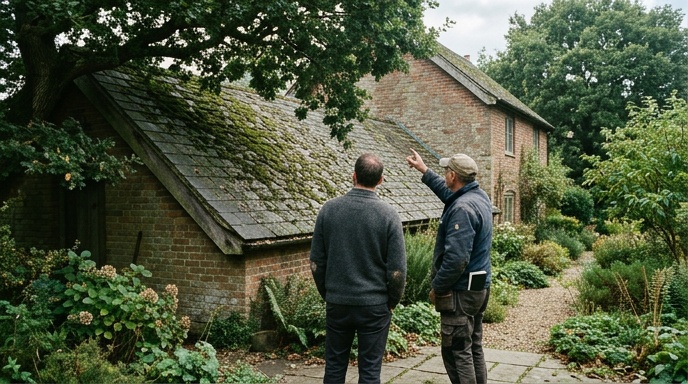
Most Irish roofs benefit from a moss clean every three to five years, though shaded, north-facing, or tree-lined roofs may need it sooner. Our damp, mild climate is ideal for moss and algae, so regrowth is a case of when, not if, even after a biocide treatment.
A few things bring the interval forward.
- North-facing slopes that get little direct sun stay damp and grow moss faster.
- Overhanging trees drop debris and shade, feeding growth.
- Older, porous tiles hold moisture and moss more readily than smooth modern ones.
Rather than clean on a fixed schedule, it’s cheaper to keep an eye on it. A quick annual look, often free as part of a general roof check, tells you whether moss is building to a point worth acting on.
For guidance on keeping a home in good order generally, the official information on housing and home maintenance is a useful reference.
Getting an Accurate Price for Your Roof
The most accurate price for roof cleaning comes from a proper look at your roof, because size, pitch, moss level, and access all shift the figure. An online range gets you in the ballpark. A person on the ground gets you a real number.
If you’d like a real figure for your own roof rather than a range, book a free, no-obligation inspection through the free roof inspection request and you’ll get an honest verdict on whether a clean is worth it or your money is better spent elsewhere.