Skip to content

A fibreglass roof costs between €70 and €100 per square metre in Ireland once supplied and fitted, which puts most domestic jobs somewhere between €2,000 and €10,000 depending on size and condition. That range stretches from a small porch or garage roof up to a full-extension roof, and Dublin prices tend to sit at the higher end.
Fibreglass, also called GRP or glass-reinforced plastic, has become the default choice for flat and low-pitch roofs because it forms one continuous waterproof layer with no joints to fail. It also lasts 25 to 30 years when laid properly, which is why homeowners keep weighing it against felt and EPDM rubber.
Below you’ll find real Irish rates per square meter, the factors that move your final quote, how VAT is applied to roofing work, and how fibreglass compares with the other flat roof options so you can read a quote with confidence.
Fibreglass Roof Cost per Square Metre in Ireland
A fibreglass roof in Ireland typically costs €70 to €100 per square metre, supplied and fitted, with Dublin sitting at the upper end of that range. For most homes, this works out at roughly €2,000 for a small porch or garage, rising to €6,500 or more for a larger extension or dormer roof.
Because fibreglass is priced by area, the size and shape of the roof drive the headline figure. A few useful reference points:
- A small flat roof such as a porch or single garage often starts from around €2,000.
- A typical single-story extension usually lands between €2,500 and €6,500 all in.
- Larger or more complex flat roofs can run to €10,000 and beyond.
- Expect a working lifespan of 25 to 30 years with a correctly laid system.
These are supply-and-fit figures. Prices exclude scaffolding, skip hire, and any structural repairs, so always confirm what a quote includes before comparing it against another.
What Affects the Price of a Fibreglass Roof?
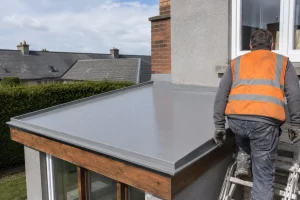
The price of a fibreglass roof moves mainly with roof size, the condition of the timber deck underneath, and how much detailing the job involves. Access, weather, and whether you add insulation also count. A sound deck keeps costs down, while rotten decking or awkward junctions push them up.
The biggest hidden variable is the deck. Fibreglass needs a dry, solid base of plywood or OSB, and if the existing boards are soft or damp, they have to be replaced first. That deck work is often the difference between a tidy quote and a surprise on the invoice.
Other things that change your number:
- Roof complexity. Simple rectangles are quick. Multiple upstands, valleys, rooflights, and pipe penetrations add labor and trims.
- Adding a warm-roof build-up raises the price per square meter but improves the BER and comfort of the room below.
- Weather and curing. Resin needs dry conditions and a minimum temperature to cure, so winter jobs can take longer and occasionally cost more.
- Labour and access costs are higher in Dublin than in most of the country.
Two roofs of the same size can differ by thousands once these factors stack up, which is why a site visit beats a phone estimate every time.
Does VAT apply to fibreglass roofing?
Most fibreglass roofing in Ireland is charged at the reduced VAT rate of 13.5%, because supply-and-fit roofing counts as a construction service rather than a plain sale of materials. The full 23% rate can apply only in specific cases, such as when materials make up more than two-thirds of the job’s value before VAT.
For a normal fibreglass job, the labour and resin work usually keep it inside the reduced rate, which is one reason a proper itemised quote matters. You can check the rules yourself in Revenue’s guidance on VAT for construction services (revenue.ie), which lists roofing directly among the qualifying works.
A clear quote should show materials, labour, and the VAT rate applied. If a roofer offers a cash price with no VAT breakdown, treat that as a warning sign rather than a saving.

Fibreglass vs. Felt vs EPDM Costs Compared
Fibreglass sits in the middle of the flat roof market on price. Felt is cheaper upfront but shorter-lived, while EPDM rubber costs a little more and tends to last longer. The table below shows typical Irish rates per square meter and realistic lifespans for the three main flat roof systems.
| System | Typical cost per m² | Expected lifespan | Best suited to |
| Fibreglass (GRP) | €70 to €100 | 25 to 30 years | Extensions, dormers, balconies, foot traffic |
| Torch-on felt | €55 to €65 | 15 to 20 years | Budget flat roofs, sheds, garages |
| EPDM rubber | €80 to €110 | 30 to 40 years | Larger flat roofs, low-maintenance jobs |
On a small roof, the price gap between these is modest, so the longer lifespan of fibreglass or EPDM often wins on cost per year. On a very large area, Felt’s lower rate per square meter can bring the total down if you accept a shorter lifespan. If you’re actually replacing a pitched tile or slate roof rather than a flat one, the materials and pricing change completely, which our wider guide to new roof costs breaks down, so match the system to the roof you have.
Is a Fibreglass Roof Worth the Cost?
A fiberglass roof is worth the cost on flat or low-pitch roofs you want to fit and forget for 25 to 30 years. It gives one continuous waterproof surface with no seams, copes well with foot traffic, and suits balconies, dormers, and extensions where a reliable finish matters. On very large or tight-budget jobs, felt can still make more sense.
Quality of installation is what protects that lifespan, so it pays to check the system a roofer uses. Reputable resin and membrane systems carry independent approval, and you can verify a product through NSAI Agrément certification for building systems (nsai.ie), which confirms materials are fit for Irish conditions. A cheaper quote using an unproven system is rarely the bargain it looks like.
How to Get an Accurate Fibreglass Roof Quote
To get an accurate fibreglass roof quote, ask for a written breakdown that separates materials, labour, deck repairs, and VAT, then compare at least two or three local quotes on a per square meter basis. A good quote also names the resin system and states the guarantee, so you’re comparing like with like rather than headline prices.
Start with a rough figure before you book visits. An online roof cost calculator gives you a ballpark in minutes, which helps you sense-check whether a later quote is fair. From there, a site survey turns that estimate into a firm price that accounts for your deck, access, and detailing.
Watch for quotes that seem far below the rest. On flat roofing, unusually low prices often mean thin resin coats, skipped deck repairs, or no VAT, all of which cost more to fix later.
A well-installed fiberglass roof is a 25 to 30 year investment, so the right roofer matters as much as the right price. For a firm figure on your own roof, arrange a free on-site survey and quote from an experienced flat roofing team.