Skip to content
already know why a patio roof is worth considering. Irish weather is never going to be predictable, but a well-designed patio roof means you can actually use your outdoor space for more than three weeks a year.
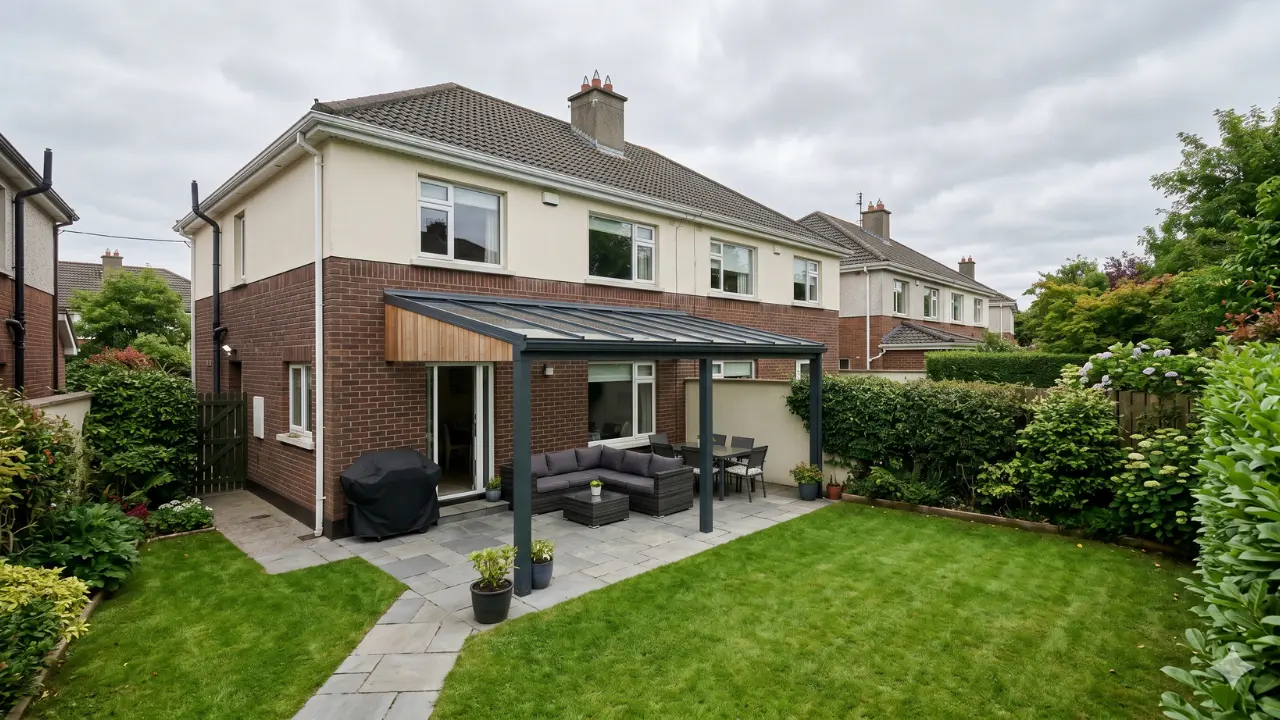
Most Irish homeowners go for either a lean-to canopy fixed to the back wall of the house, a freestanding pergola with partial cover, or a fully glazed veranda-style structure. Each option suits different budgets, garden sizes and house styles. The right choice depends on how much shelter you want, what your property looks like, and how much you’re willing to spend.
Below, we’ll walk through the most popular patio roof styles, the materials that hold up best in Irish conditions, planning permission rules, and a rough guide to costs. Whether you’re working with a small courtyard in Dublin 6 or a large south-facing garden in Meath, there’s a patio roof to match.
Why Does a Patio Roof Make Sense in Ireland?
Ireland gets an average of 150 to 225 rain days per year depending on where you live. That’s a lot of afternoons spent looking out the window at garden furniture you can’t sit on. A patio roof changes the equation completely.
With a covered patio, you get a usable outdoor living space from early spring right through to late autumn. It protects garden furniture from constant rain damage, which saves money on replacements. It also adds a bit of value to your property, because buyers notice a well-finished outdoor area.
Beyond the practical stuff, a patio roof gives you somewhere to eat, read, or have friends over without worrying about the forecast. If you’re already considering a flat roof extension for extra indoor space, a patio roof can work as a smaller-scale alternative that still transforms how you use your home.
What Are the Most Popular Patio Roof Styles?
There’s no single “best” style. It comes down to your house type, your budget and what you actually want from the space. Here are the options that work well in Irish settings.
Lean-To and Canopy Roofs
Lean-to roofs (sometimes called monopitch or shed-style roofs) are the most common choice for Irish patios. They attach directly to the back wall of the house and slope away at a gentle angle. Simple, effective, and relatively affordable to build.
If you’re comparing common roof designs and their advantages, the lean-to consistently ranks as the easiest to construct and maintain. It works with most house styles, from 1970s semis to modern new-builds.
Pergolas and Open-Frame Roofs
Pergolas give you a partially covered space with an open, airy feel. Traditional timber pergolas suit period-style homes, while aluminium-framed versions work better with modern builds.
Some homeowners add retractable fabric canopies or louvred panels to a pergola frame, which gives you the option to open up on dry days and close over when rain hits. These are more expensive than a fixed lean-to but give you far more flexibility. If you’re building the frame yourself, DIY plans from Craftcamp cover a range of pergola designs and dimensions.
Glass Verandas and Enclosed Canopies
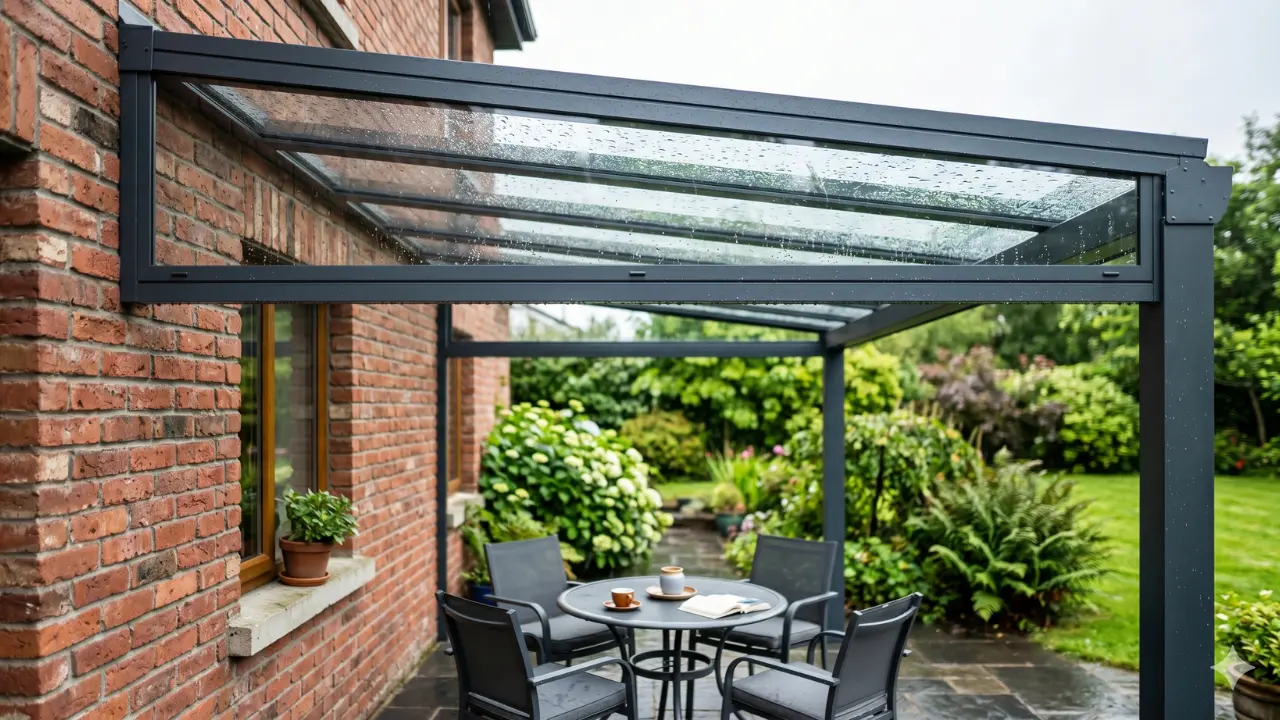
A fully glazed veranda is the premium option. Glass panels (usually toughened laminated safety glass) sit on an aluminium frame, giving full weather protection while letting in plenty of natural light. They’re popular with homeowners who want the feeling of being outdoors without getting rained on.
Enclosed verandas can also include side panels or sliding doors, effectively creating a halfway point between a patio roof and a conservatory.
Which Materials Work Best for Patio Roofs?
Material choice matters more in Ireland than in drier climates. Whatever you pick needs to handle heavy rain, occasional strong winds, and the odd frost without falling apart.
- Polycarbonate sheets are lightweight, affordable and let diffused light through. They’re the most budget-friendly option and suit lean-to canopies well. Expect a lifespan of around 15 to 20 years with proper care.
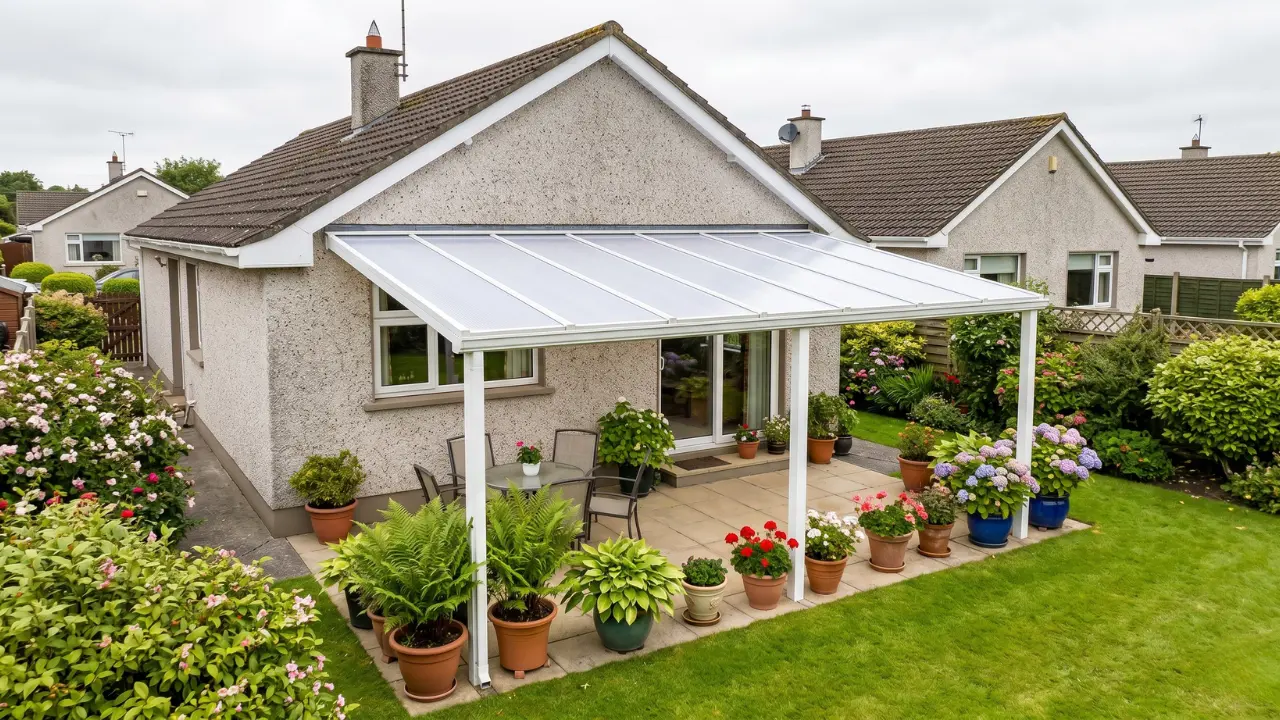
- Toughened glass panels offer a cleaner look and better light transmission. They’re heavier and more expensive, but they don’t discolour over time the way cheaper polycarbonate can.
- Aluminium frames are the standard for modern patio roofs. They’re corrosion-resistant, low maintenance, and strong enough to support glass or polycarbonate panels in exposed locations.
- Timber frames suit traditional or cottage-style properties. Softwood (treated pine or larch) is the most affordable timber option, though hardwoods like oak last longer. Timber needs regular re-staining or oiling to cope with Irish damp.
- Torch-on felt or single-ply membrane works for solid lean-to roofs where you don’t need light coming through. These are the same materials used on flat roof extensions, so they’re well proven in Irish weather.
When you’re weighing up options, it helps to understand how different residential roofing materials compare in terms of durability, cost and maintenance, as many of the same principles apply to patio roofs.
Do You Need Planning Permission for a Patio Roof?
This is one of the first questions most homeowners ask, and the good news is that many patio roofs fall within exempted development rules.
Under Irish planning regulations, you can build a structure to the rear of your house without planning permission as long as it doesn’t increase the original floor area by more than 40 square metres (including any previous extensions). The structure must not exceed 4 metres in height if it has a pitched tiled or slated roof, or 3 metres for any other roof type. The Citizens Information website has a full breakdown of the current exemption conditions, and it’s worth checking before you commit.
Freestanding pergolas and removable canopies generally don’t need planning permission at all, as they’re classed as temporary or removable structures. But if your property is a protected structure or sits in an architectural conservation area, different rules apply.
When in doubt, a quick phone call to your local planning office will save a lot of hassle later.
How Much Does a Patio Roof Cost in Ireland?
Costs vary widely depending on the size, materials and whether you’re hiring a contractor or going the DIY route. As a rough guide for a standard 3m x 4m patio roof (12 square metres) in 2026, expect the following ranges.
- Polycarbonate lean-to canopy (supply and fit) typically runs from around €2,500 to €5,000.
- Glass veranda with aluminium frame tends to fall between €5,000 and €12,000 depending on specification.
- Timber pergola with partial roof cover usually costs between €3,000 and €7,000.
- Solid lean-to roof with felt or membrane (effectively a small extension roof) can range from €4,000 to €9,000.
These figures are indicative and will vary depending on your location, site access and the contractor you choose. It’s always worth getting at least three quotes. If you’re weighing a patio roof against a full flat or pitched roof extension, the patio roof is almost always the more affordable option for adding usable outdoor space.
How Do You Choose the Right Patio Roof for Your Home?
Start with what you actually need from the space. If you just want somewhere dry to sit and have a coffee, a simple polycarbonate lean-to will do the job. If you’re planning to use the patio for dining and entertaining through the year, a glass veranda or enclosed canopy is worth the extra investment.
Think about your house style too. A sleek aluminium and glass canopy can look out of place on a stone-fronted cottage, just as a rustic timber pergola might clash with a modern new-build. The best patio roofs feel like a natural extension of the house, not an afterthought.
Drainage is another thing people overlook. Any attached patio roof needs proper guttering and downpipes to handle rainwater runoff. Without them, you’ll end up with pooling water at the base of the wall, which can lead to damp problems over time.
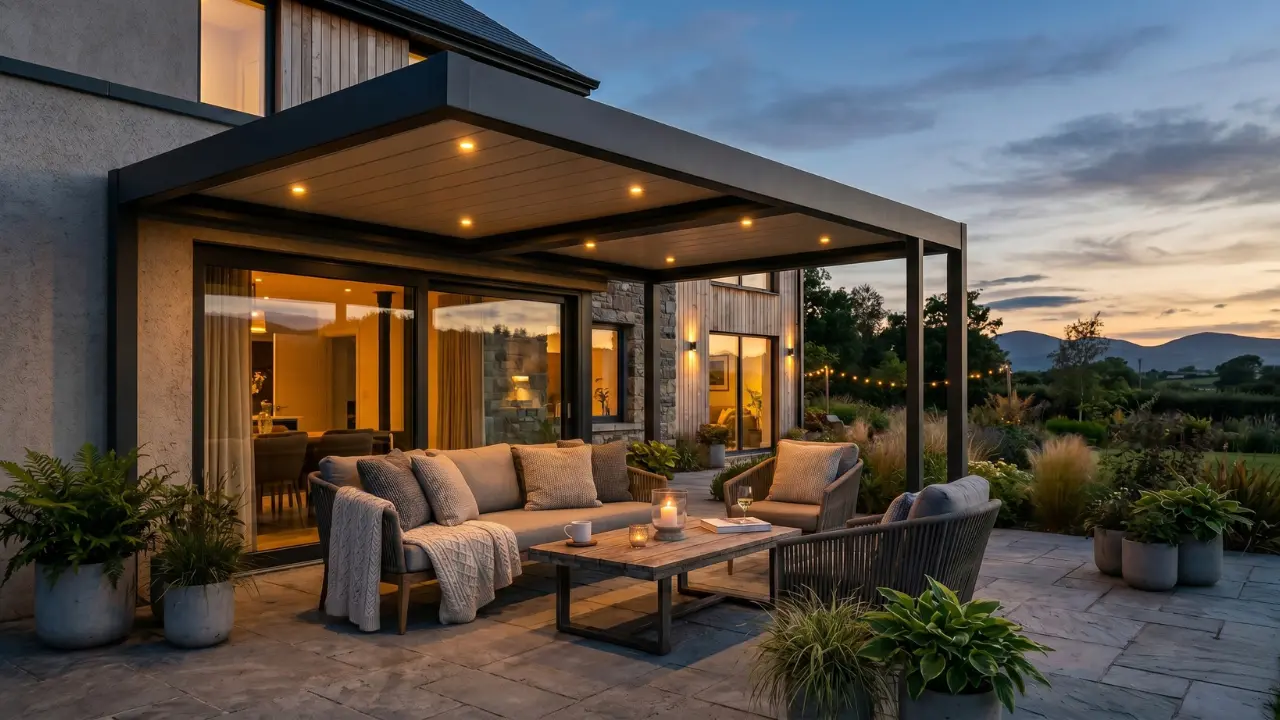
Finally, get professional advice before you commit. A roofing contractor can assess your wall fixings, check for adequate structural support, and make sure the finished roof ties in properly with your existing drainage.
A patio roof is one of the smartest upgrades you can make to an Irish home. It doesn’t need to cost a fortune, it rarely needs planning permission, and it turns dead outdoor space into somewhere you’ll actually use. If you’re thinking about adding one, HP Roofing can talk you through the options and get the job done right. Give us a call on 01 453 3366 or drop us a line at [email protected].