Skip to content

Slipped or cracked roof tiles are one of the most common causes of household leaks in Ireland. Left unchecked, even a single damaged tile can let moisture seep into your attic, stain your ceilings, and quietly rot the timbers underneath. The good news is that, in some cases, you can replace a roof tile from inside your attic without ever stepping onto a ladder.
Replacing a roof tile from inside involves accessing the tile through the attic, lifting it off the battens from underneath, sliding a matching replacement into position, and bedding it securely. It works best with standard concrete or clay interlocking tiles on a straightforward pitched roof. If your roof has a breathable membrane and clear attic access, this can be a practical short-term fix for a single broken tile.
That said, not every tile replacement is a DIY job. Older roofs, complex tile profiles, and situations where multiple tiles have shifted will almost always need a professional roofer with the right safety equipment. Here’s how to work out whether you can tackle it yourself and what the process looks like step by step.
How Do You Know a Roof Tile Needs Replacing?
The easiest way to spot a problem is from inside the attic. On a bright day, turn off any lights and look upward. If daylight is coming through the roof in small pinpoints or lines, you likely have a cracked, slipped, or missing tile.
Other signs include damp patches on the underside of the roof felt, water stains on ceiling plasterboard below the attic, or a musty smell that won’t shift. If you’ve noticed any of these, it’s worth checking for the early signs of a roof leak before the damage spreads further.
Keep an eye on the gutters too. Fragments of tile or grit collecting in the downpipes often indicate surface deterioration, even if the tile hasn’t fully cracked yet.
What Tools Do You Need to Replace a Roof Tile from Inside?
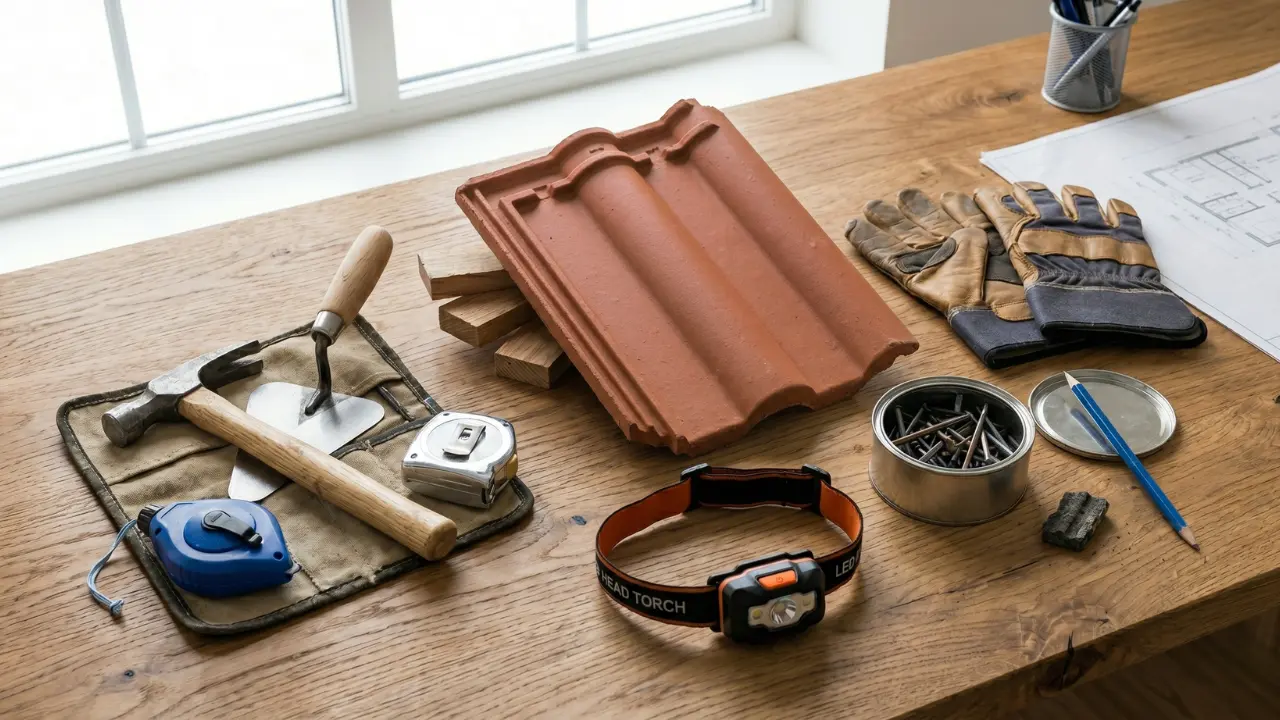
Before heading into the attic, gather everything you need. Going back and forth is awkward in a confined space, so preparation matters.
- A replacement tile that matches the existing profile, size, and colour.
- A small trowel or flat pry bar for easing tiles off the battens.
- Timber wedges or offcuts to prop neighbouring tiles while you work.
- A head torch or battery-powered work light (attics are dark).
- Thick work gloves and a dust mask, especially in older attics with fibreglass insulation.
- A kneeling board or piece of plywood to spread your weight across the joists.
Never step between the joists. You’ll go straight through the ceiling. Always walk on the joists themselves or lay boards across them.
How Do You Remove and Replace a Roof Tile from Inside?
Once you’ve located the damaged tile from the attic side, the process is relatively straightforward. Here’s how it works.
Removing the Damaged Tile
If your roof has a breathable membrane or traditional felt underlay, you’ll need to carefully cut or fold it back to expose the underside of the tiles and battens. Use a sharp blade and cut only what’s necessary.
Ease the damaged tile upwards using your trowel or pry bar. Most concrete and clay interlocking tiles sit on timber battens with small nibs that hook over the wood. A gentle push from below should free the nib. If the tile is also nailed (common on exposed or edge tiles), you may need to carefully work the nail loose with a claw or pry bar.
Use timber wedges to prop the tiles above and to either side, giving yourself enough room to slide the broken tile free without disturbing the surrounding ones.
Fitting the Replacement Tile
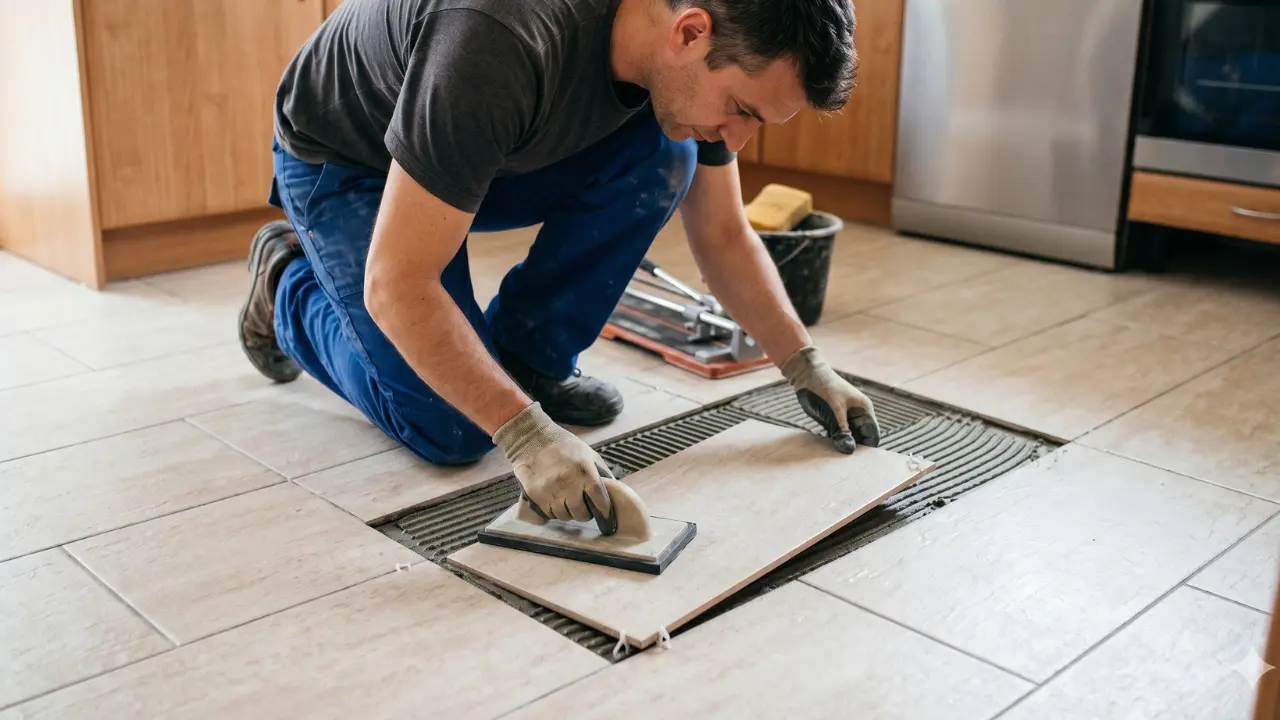
Slide the new tile into position from below, hooking the nib over the batten. The tile should sit flush with its neighbours and overlap correctly to shed rainwater. Give it a gentle push to confirm it’s seated.
If the original tile was nailed, the replacement should be too. Drill a small pilot hole through the tile’s nail hole and secure it with a copper or stainless-steel nail. Avoid using standard steel nails, as they corrode quickly in Irish weather.
Once the tile is in place, carefully fold the membrane back and patch any cuts with a self-adhesive roofing repair tape. This keeps the underlay watertight even if driving rain gets behind the tiles.
When Should You Call a Professional Roofer Instead?
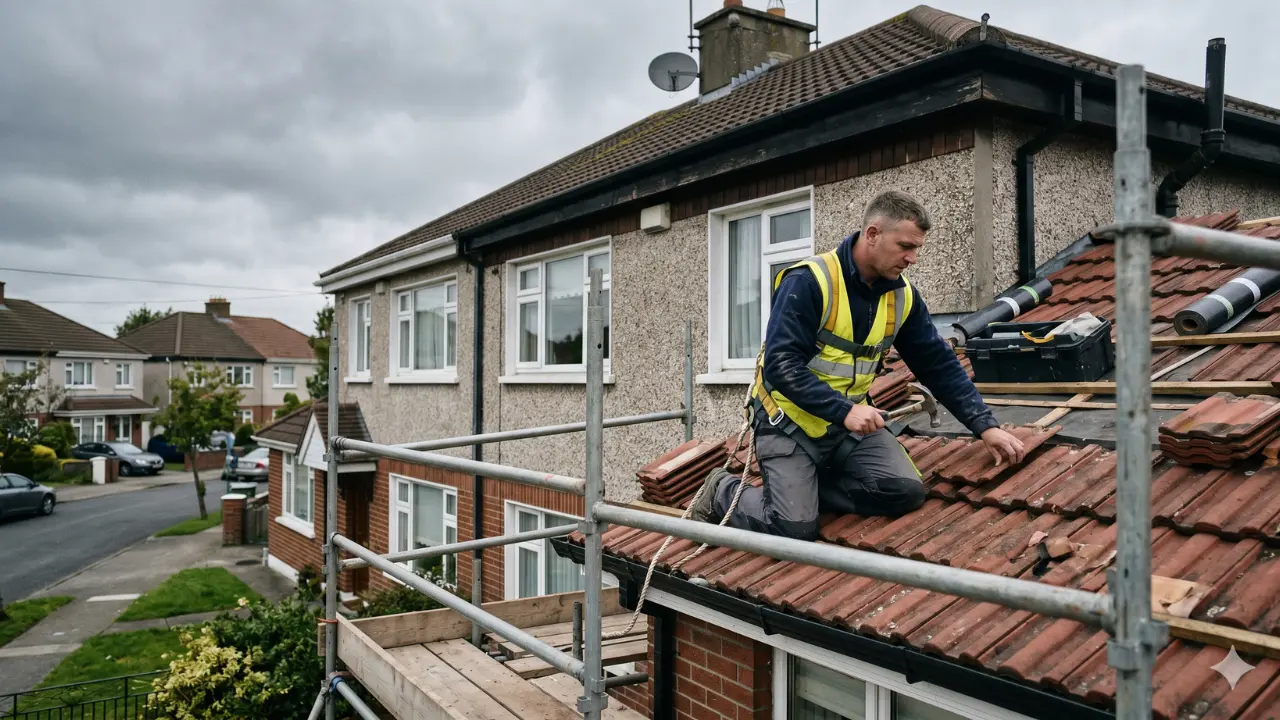
Replacing a single tile from the attic is a reasonable job for a competent homeowner. But there are situations where it’s safer (and smarter) to bring in a professional.
If more than two or three tiles are damaged, the problem is likely bigger than a quick swap. Multiple broken tiles can point to storm damage, failing battens, or a structural issue with the roof itself. A qualified roofer will assess the full picture rather than patching individual tiles.
Slate tiles, flat concrete tiles without interlocking profiles, and heritage roofing materials are harder to work with from underneath. These often need to be accessed from outside using scaffolding or a roof ladder. The Health and Safety Authority’s Code of Practice for Safety in Roofwork sets out the safety standards that apply to anyone working on or near a roof, and it’s worth reading if you’re unsure whether a job is within your ability.
Also, if your roof has no felt or membrane underneath the tiles (common in pre-1980s Irish homes), working from the attic means you’re directly exposed to the elements. One wrong move and you could dislodge several tiles at once.
Why Regular Roof Inspections Prevent Bigger Problems
A cracked tile is rarely an isolated problem. It’s usually a warning sign that the roof is ageing and other tiles may follow. Getting a professional inspection every couple of years is the simplest way to catch small issues before they turn into expensive repairs.
During an inspection, a roofer will check the condition of tiles, ridge caps, flashings, and the underlay. They’ll also look at the timber battens and rafters for signs of rot or woodworm. If you’re thinking about different tile types and their longevity, an inspection is a good time to discuss your options with your roofer.
For older homes across Dublin and Leinster, regular maintenance is especially important. Irish weather puts serious pressure on roofing materials, and catching a slipped tile early is always cheaper than dealing with water damage to ceilings, insulation, and wiring.
Replacing a roof tile from inside can save you money and buy you time. But it’s a temporary measure, not a permanent fix. If you’re dealing with more than one or two tiles, or if you’re not fully confident working in an attic, bring in a roofer who can do the job safely from outside. HP Roofing has been looking after Dublin roofs for over 55 years. Give us a call on 01 453 3366 or fill in our online quote form to get the right repair sorted.