Skip to content

Most roof problems don’t announce themselves. There’s no alarm bell when a tile slips or a flashing starts to lift. What usually happens is quieter and slower: a small leak creeps in, moisture builds behind plasterboard, and by the time you notice the stain on the ceiling, the damage has spread well beyond the original entry point.
Spotting roof damage early is one of the easiest ways to avoid a bill that runs into the thousands. Cracked or slipped tiles, sagging ridgelines, damp patches on interior walls, and blocked or pulling gutters are all signs that something isn’t right overhead. Catching these early, even from ground level, can be the difference between a quick repair and a full replacement.
You don’t need to climb a ladder to check most of this. A quick walk around the outside of your house and a careful look at ceilings, walls, and the attic space will tell you more than you’d expect. Here’s what to look for and when to bring in a professional.
What Does Roof Damage Actually Look Like?
Roof damage comes in plenty of forms, and not all of them are obvious. Some signs are easy to spot from the ground. Others take a closer look.
Start with the tiles or slates themselves. If you can see any that have slipped out of position, cracked, or gone missing entirely, that’s water getting in. Even one missing tile can let moisture travel along battens and into timbers. Irish weather doesn’t give you long before that moisture causes real trouble, as anyone who’s read about how Irish weather impacts your roof will know.
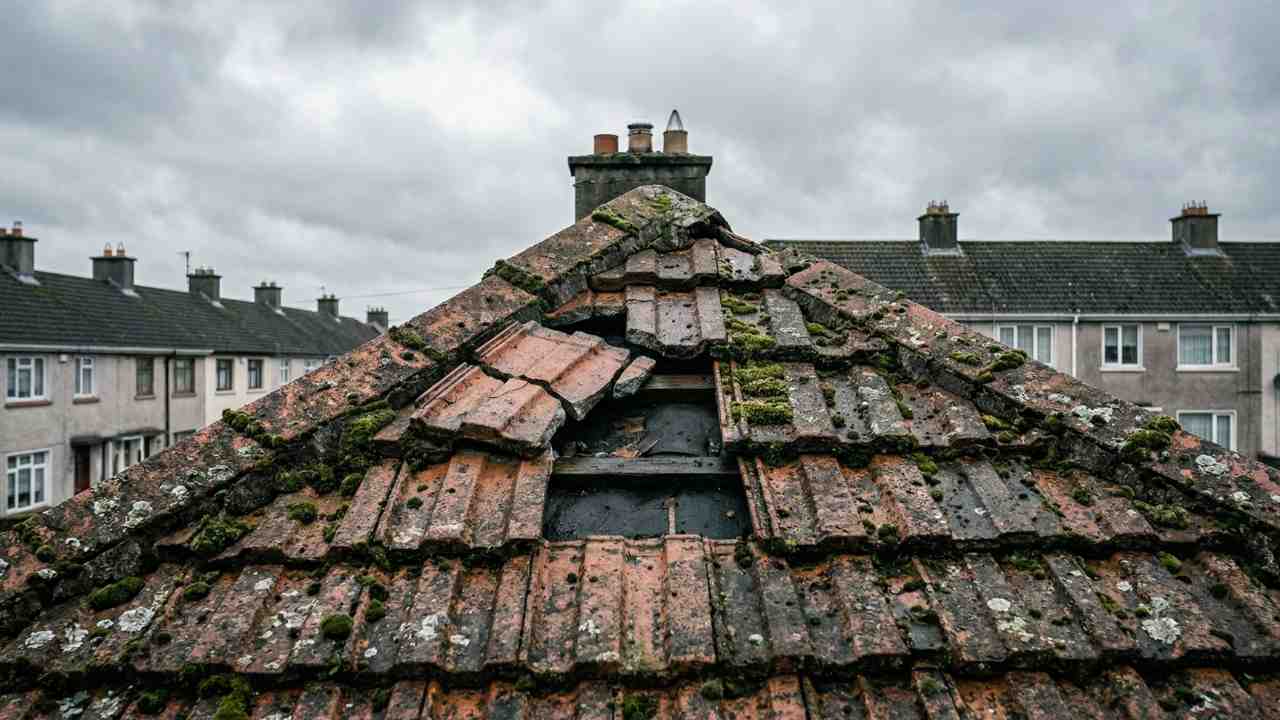
Look at the ridgeline too. If the ridge tiles along the top of the roof are sitting unevenly or you can see gaps in the mortar holding them, wind-driven rain will find a way through. Ridge repointing is a common enough job, but left too long it turns into a bigger problem.
Moss and algae growth is another giveaway. A bit of moss won’t collapse your roof overnight, but heavy build-up traps moisture against tiles and can work its way under them over time. If you’re dealing with serious moss growth, it’s worth looking into safe removal methods before it causes structural issues underneath.
Can You Spot Roof Damage From Inside?
Some of the clearest warning signs show up inside the house, not outside.
Ceilings and Walls
Water stains on ceilings are the classic indicator. They tend to appear as yellowish-brown marks that grow slowly over time. But don’t wait for a stain to appear. Peeling paint, bubbling wallpaper, or a musty smell in upstairs rooms can all point to moisture entering from above.
If you notice damp patches on walls, especially on upper floors, the source is often the roof rather than rising damp. Tracking the origin can save you from treating the wrong problem entirely.
Attic and Loft Space
Your attic is one of the best places to catch damage early. On a dry day, head up with a torch and look for daylight coming through the roof boards. Even small pinpricks of light mean water can get in.
Check the timber rafters and purlins for dark patches, soft spots, or signs of rot. Look at the underside of the roof felt too. If it’s sagging, torn, or wet to the touch, there’s a breach somewhere above that needs attention.
What About Gutters, Flashings, and Flat Roof Sections?
Tiles and slates get most of the attention, but plenty of roof damage starts at the edges and joints.
- Gutters that are pulling away from the fascia board, blocked with debris, or overflowing during rain put extra water against walls and soffits. Over time, this saturates masonry and can lead to damp inside the house.
- Lead flashings around chimneys, skylights, and wall abutments are common failure points. If the lead has lifted, cracked, or been patched with sealant one too many times, water will track in behind it. Chimney flashing problems are especially common on older Dublin homes.
- Flat roof sections on extensions, porches, and dormers need regular checks. Pooling water, blistering felt, or visible cracks in the membrane all suggest the waterproofing layer is failing.
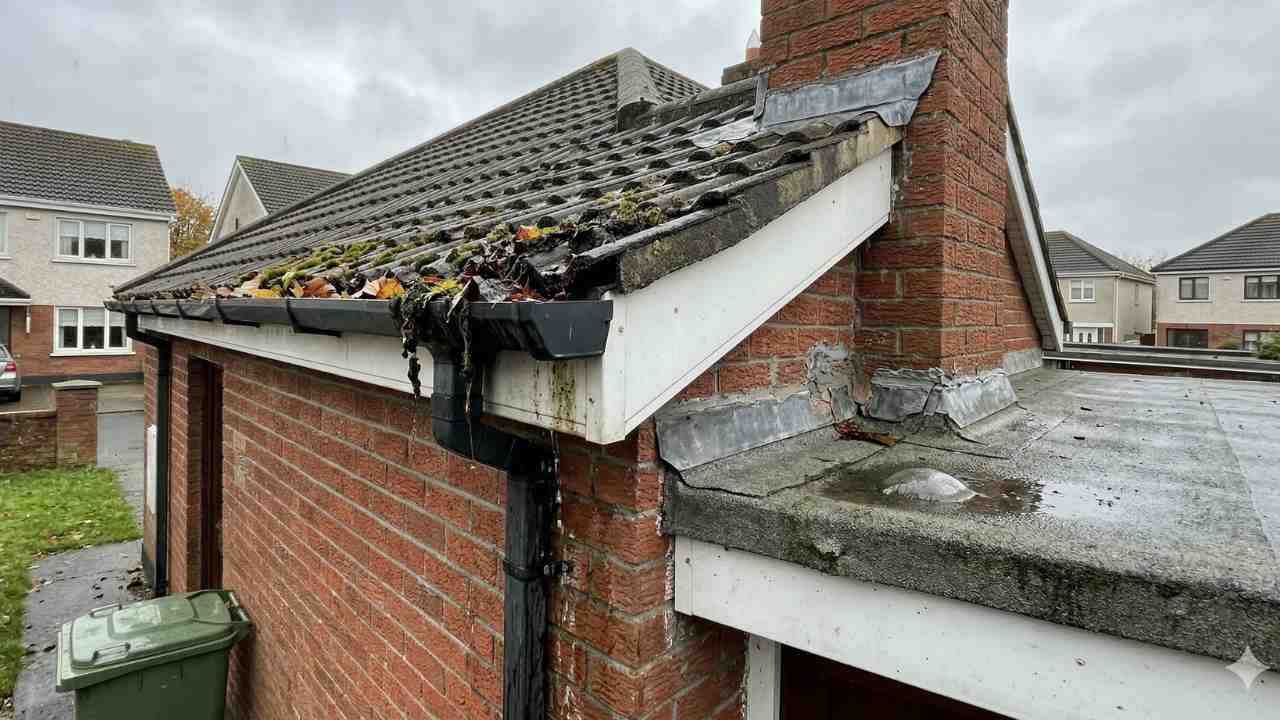
These aren’t glamorous parts of the roof, but they’re where a lot of the expensive problems start. A blocked gutter might cost €50 to clear. Ignoring it could mean hundreds or thousands in water damage repairs down the line.
How Often Should You Check Your Roof?
Twice a year is a good rule. Once in autumn after the leaves have dropped and before the worst of winter, and again in spring to catch anything that the winter storms left behind. The Society of Chartered Surveyors Ireland has published guidance recommending regular property inspections, and your roof should be part of that routine.
After any serious storm (and Ireland gets plenty), it’s worth doing a quick ground-level check. Look for tiles in the garden, pieces of flashing on the ground, or gutters hanging loose. If anything looks off, get it assessed quickly rather than waiting for the next scheduled check.
Properties with mature trees nearby should be checked more frequently. Overhanging branches can damage tiles directly, and falling leaves accelerate gutter blockages and moss growth. Older homes, particularly those built before the 1970s, tend to have more vulnerable roofing systems and benefit from closer attention.
When Should You Call a Professional Roofer?
If you can see the damage from the ground, or if you’ve found signs of moisture inside the house, it’s time to get a professional assessment. Roof work isn’t a DIY job for most homeowners. The risks of working at height and the chance of making things worse both outweigh the cost of a proper inspection.
A qualified roofer will identify not just the visible damage but also what’s happening underneath: deteriorating felt, weakened timbers, poor ventilation causing condensation. Understanding why timely roof repair matters puts you in a much better position to make smart decisions about what needs fixing now versus what can wait.
When choosing a contractor, look for membership of bodies like the National Guild of Master Craftsmen, proof of insurance, and CSCS certification for all on-site workers. HP Roofing has been carrying out roof repairs and inspections across Dublin and Leinster for over 55 years, working on everything from standard residential repairs to conservation projects at Trinity College Dublin and The Shelbourne Hotel.
Small problems on your roof rarely stay small. A slipped tile becomes a leak, a leak becomes timber rot, and timber rot becomes a job that costs ten times what the original fix would have. Walk around your house, look up, look inside, and if something doesn’t look right, get it checked. It’s one of the simplest things you can do to protect your home. Get in touch with HP Roofing for a no-obligation roof inspection.